

Evidence-Based Brain Performance Expert
PanBrain EC2 Reads Your Brain Activity With Real-Time EEG, Delivers Precision tDCS Stimulation, And Shows You A Data Report After Every Session. No Guessing. Just Evidence.
The closed loop
It reads your brain.
SENSE
Before it stimulates, it listens.
Medical-grade EEG sensors at your forehead read your brain’s electrical activity in real time — attention levels, drowsiness, mental state. Your brain is different every day. Your device should know that.
It trains your brain.
STIMULATE
Precision stimulation, personalized to you.
Based on your live EEG, the EC2 calibrates gentle 1–2mA tDCS microcurrents to your dorsolateral prefrontal cortex — the brain’s command center for focus, memory, and mood — paired with gamma or alpha audio protocols.
It proves it to you.
SEE
Every session ends with evidence.
Open the app. See your attention score, brain state timeline, and your trend over weeks. This is what 12,000+ users see after every session — not a promise, a report.
Trained on 100,000+ real EEG sessions. Every session from every user makes the personalization algorithm smarter. Your device on day 90 knows your brain better than day 1.

Focus, relaxation & fatigue — scored after every session

Session trends & how you compare

A training plan tuned to your data

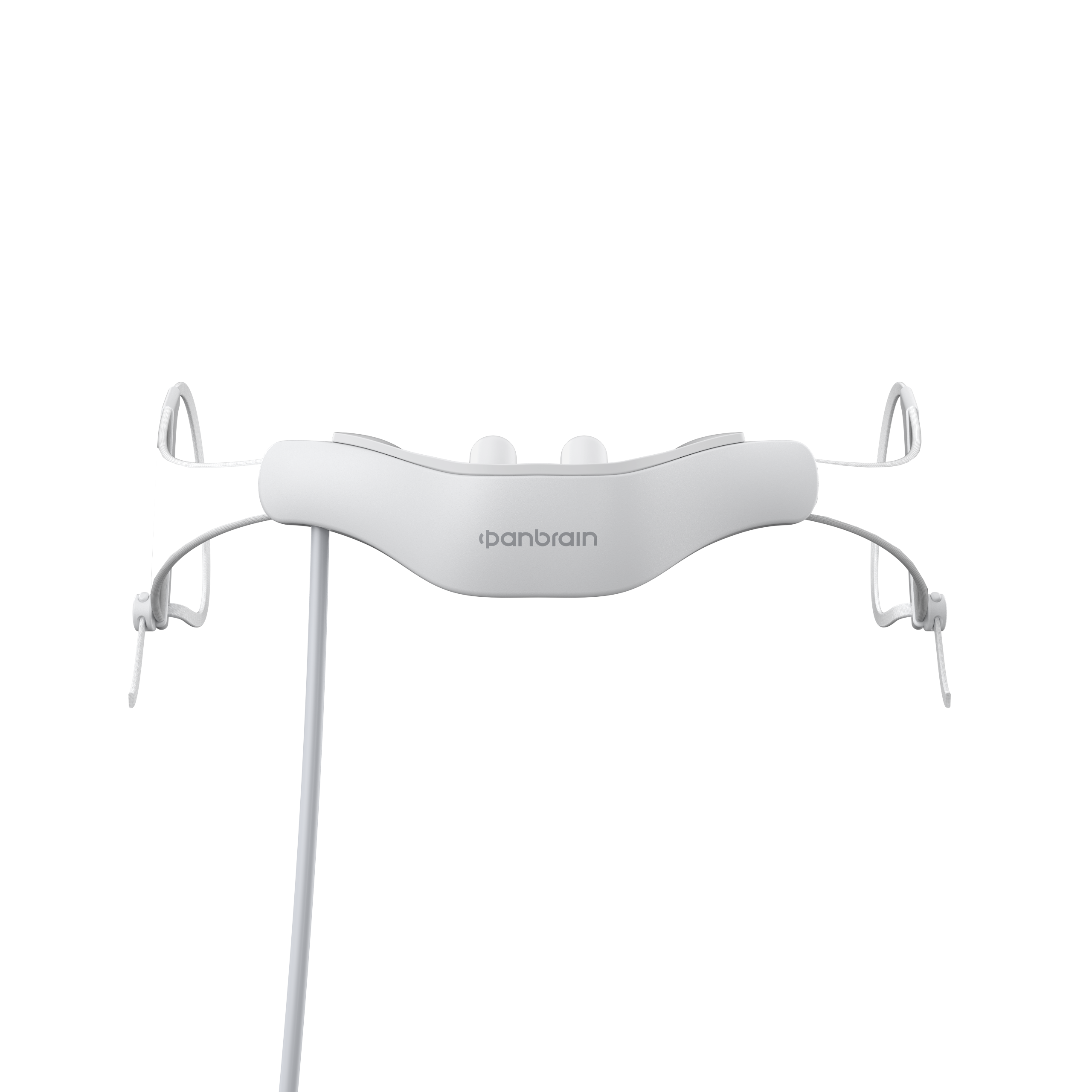
LUME
asleep | mood version

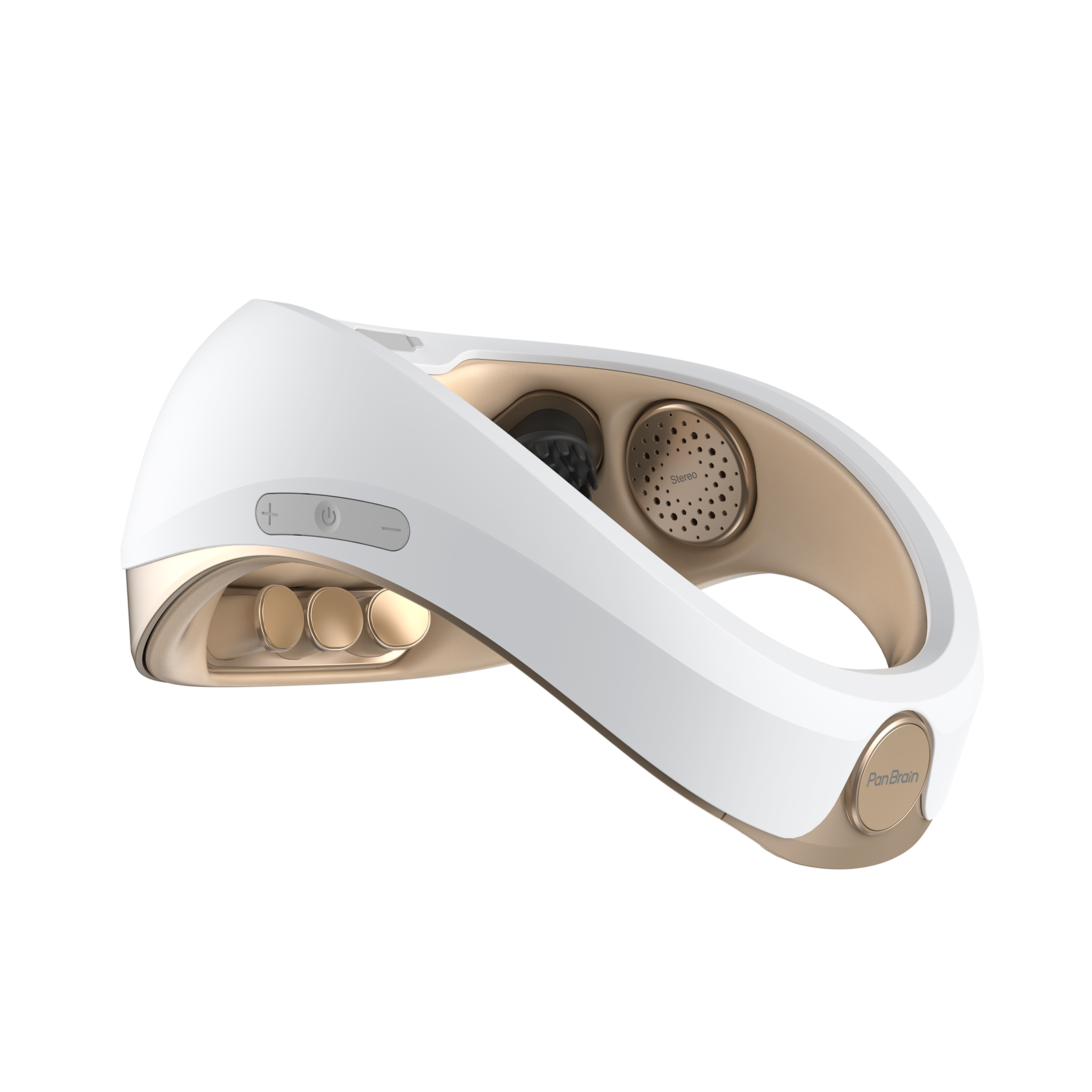
EC2 Gold Energy
Energy version

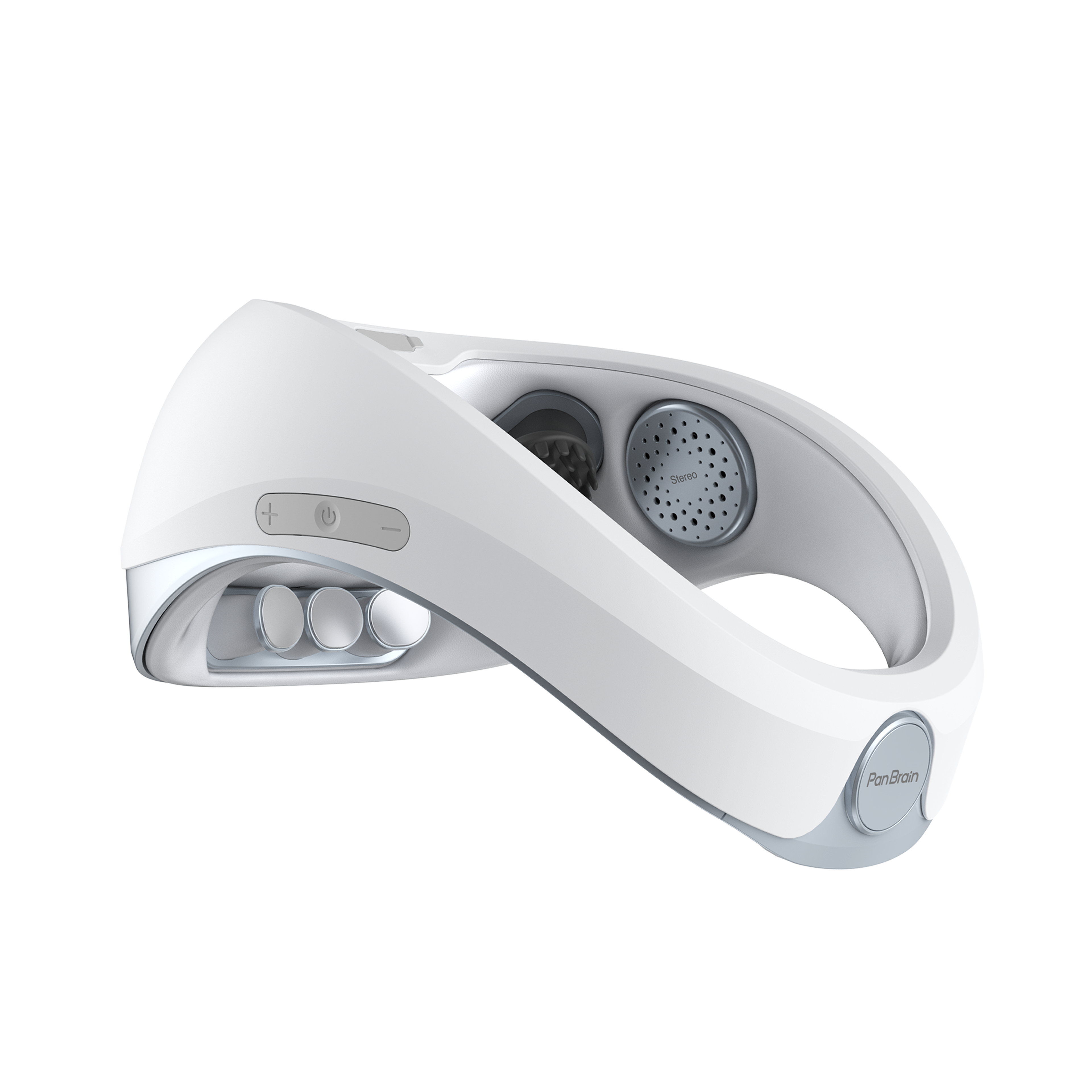
EC2 Blue Cognition
Cognition version

Built by a Yale-Trained Neuroscientist
Dr. Nailin Yao spent a decade studying the human brain — as a postdoctoral fellow at Yale School of Medicine and a PhD researcher at the University of Hong Kong, with 19 peer-reviewed publications. Frustrated that brain science stayed locked inside labs, she founded PanBrain to put clinically-studied neurotechnology into a device you can use at your desk.
- Yale School of Medicine, Postdoctoral Fellow
- PhD, University of Hong Kong
- 19 Peer-Reviewed Papers
- 12,000+ Users in 30+ Countries
60-second quiz
Not sure which one fits you?
Answer 4 questions and get matched with the right device — evidence included.


“Since using PanBrain for 20 minutes every morning, the 'brain fog' has simply vanished.”


“I finally sleep through the night without waking up with racing thoughts.”


"After three weeks with PanBrain, I feel like I’ve hit the refresh button on my brain. I feel sharper in meetings and more present at home."
Who is PanBrain for?
Use your own words — not ours. Find the situation closest to yours.
“I studied for hours and remembered nothing.”
Sound familiar? EC2 Blue’s gamma protocol targets working memory and retention — in our 100-participant program, memory scores improved an average of 23% in 4 weeks.
For students & exam prep →“Sharp at 9am. Foggy by 3pm.”
The afternoon crash isn’t a caffeine problem — it’s a brain energy problem. Users report sustained focus through the workday after 3 weeks. Focus scores: +38% on average.
For deep work & brain fog →“Tired but wired. Calm feels out of reach.”
EC2 Gold’s alpha protocol is designed for stress regulation and emotional balance — participants reported 37% less stress and 42% better mood in 4 weeks.
For stress & mood →“Falling asleep shouldn’t be the hardest part of your day.”
Two paths to better rest: Lume’s 810nm near-infrared light therapy (from $390), or EC2 Gold’s full tDCS sleep program. Users saw 36% fewer nighttime awakenings.
For better sleep →“For the parents who forget where they put their keys.”
Gentle, non-invasive cognitive support for age-related memory changes. Simple enough for a 70-year-old to use alone — and you’ll see their progress in the app.
For senior cognitive care →
Panbrain: Banish fatigue.
 Passive Monitoring (Tells you that you are stressed/tired).
 Active Intervention (Actually reduces stress and boosts focus).
Awareness only. Leaves you wondering "Now what?"
Results-driven. Provides a biological "Way Out."
Zero. It only records your body's signals.
Direct. Optimizes neural firing in the Prefrontal Cortex.
Notifications that distract you further.
Flow State on demand. Doubled efficiency and clarity.
Tracking history.
Engineering the future of your performance.
Active Intervention (Actually reduces stress and boosts focus).
Awareness only. Leaves you wondering "Now what?"
Results-driven. Provides a biological "Way Out."
Zero. It only records your body's signals.
Direct. Optimizes neural firing in the Prefrontal Cortex.
Notifications that distract you further.
Flow State on demand. Doubled efficiency and clarity.
Tracking history.
Engineering the future of your performance.
 "I know I'm exhausted."
"I am ready to perform."
Passive Monitoring (Tells you that you are stressed/tired).
Active Intervention (Actually reduces stress and boosts focus).
Awareness only. Leaves you wondering "Now what?"
Results-driven. Provides a biological "Way Out."
Zero. It only records your body's signals.
Direct. Optimizes neural firing in the Prefrontal Cortex.
Notifications that distract you further.
Flow State on demand. Doubled efficiency and clarity.
Tracking history.
Engineering the future of your performance.
"I know I'm exhausted."
"I am ready to perform."
"I know I'm exhausted."
"I am ready to perform."
Passive Monitoring (Tells you that you are stressed/tired).
Active Intervention (Actually reduces stress and boosts focus).
Awareness only. Leaves you wondering "Now what?"
Results-driven. Provides a biological "Way Out."
Zero. It only records your body's signals.
Direct. Optimizes neural firing in the Prefrontal Cortex.
Notifications that distract you further.
Flow State on demand. Doubled efficiency and clarity.
Tracking history.
Engineering the future of your performance.
"I know I'm exhausted."
"I am ready to perform."
"Tracking your poor sleep won't make you less tired. Monitoring your stress won't finish your project. It's time to stop watching the data and start changing the outcome."
Blue Morning Launch


Power Nap Recharge


Golden Reset Escape


Unstoppable Night Drive


Deep & Definitive Rest


What Real Users are Saying

Rapha Cruz
High-Performance Mentor
“PanBrain has brought remarkable value to both my professional coaching and sports practice, significantly enhancing overall results and performance outcomes.”

Dr. Roman Velasquez
Sport NeuroCognitive Efficiency Specialist
“After just one week with PanBrain, my focus endurance and mental clarity improved dramatically—it's an essential tool for anyone seeking sharper cognition and relief from brain fog.”

Dr Mahboubeh Karimi
Clinical Psychologist
“Our clients report highly positive results with PanBrain, praising its ease of use and effectiveness in improving cognitive function and brain health.”

Dr Rodolfo Parreira
Physical Therapist Post-Doctoral Fellow in Human Movement
“Within two weeks, both my colleague and I noticed clear memory and focus improvements while working—PanBrain enhances concentration and cognitive performance in daily tasks.”

Dr Daniela Bernardi
Clinical Psychologist Professor of Psychology at Unifil Specialist in CBT & Neuroscience
“PanBrain has significantly improved my executive functions, attention, and sleep quality, making it an exceptional, easy-to-use device for both clinical and home brain health support.”

Dr Eduardo Vera Barrios
Former President of the Canary Islands Association of Neuropsychiatry & Mental Health Psychiatrist and Psychotherapist
“The PanBrain goal edition stands out for its precision, comfort, and innovation—offering both clinical effectiveness and a unique user experience that makes neural modulation accessible and enjoyable.”


PanBrain in the news
LUME: NEUROTECH
PanBrain Redefines Sleep Science
GITEX
GLOBAL
PanBrain attends 2025 GITEX global exhibition
BEYOND
MACAU
PanBrain attends 2025 BEYOND MACAU exhibition
French Design Award
PanBrain Mindful Energy Capsule
FirstWord HEALTHTECH
PanBrain Launches LUME
FAQ
A tDCS device — short for transcranial direct current stimulation device, and sometimes called a tDCS headset, tDCS machine, or tDCS unit — is a non-invasive brain stimulation device that delivers a very low, constant electrical current (typically 1–2 mA) through electrodes placed on the scalp. This gentle current modulates activity in targeted brain regions, such as the prefrontal cortex, the area behind focus, memory, and emotional regulation. Once confined to research labs, modern home tDCS devices like the PanBrain headset now make this technology portable, automated, and simple enough for anyone to use.
A tDCS device passes a mild direct current between electrodes on the head. The current flows in an arc through the prefrontal cortex and subtly shifts neurons' resting membrane potential — it doesn't force neurons to fire, but makes active neurons more responsive. With consistent daily sessions (about 15 minutes), this repeated activation strengthens prefrontal neural connections through neuroplasticity. Over time, users typically experience this as sharper attention, faster thinking, steadier mood, higher mental energy, and better sleep quality.
tDCS is one of the most extensively studied forms of non-invasive neurostimulation and is considered safe for healthy adults at standard intensities (≤2 mA). The most common side effects are mild and temporary: tingling, itching, or slight redness under the electrodes. PanBrain adds extra layers of protection — precise current control and fixed, pre-set electrode positioning — so every session stays within safe, research-backed limits. tDCS is not recommended for people with epilepsy, implanted electronic devices (e.g., pacemakers), metal implants in the head, or during pregnancy, and it is intended for adults 18+. Consult your physician if you have a neurological condition.
tDCS has been examined in thousands of peer-reviewed papers and hundreds of clinical trials worldwide, covering attention, working memory, learning, mood, and sleep. Meta-analyses generally report modest but consistent cognitive benefits, especially with repeated use. In PanBrain's joint study with partner hospitals, participants using the device 15 minutes daily for four weeks (20 sessions) reported improvements in focus (+38%), memory (+23%), mental energy (+36%), mood (+42%), stress (−37%), and sleep quality (+36%). Individual results vary, and consistency is the strongest predictor of benefit.
Yes — most research protocols and consumer devices use one 15–20 minute session per day. With PanBrain, the standard routine is a single 15-minute daily session, and the device powers off automatically to prevent overuse. Most users report first noticeable changes within one week and more stable improvements after two to three weeks. Longer or more frequent sessions do not accelerate results — like exercise, neuroplastic change builds through regular repetition, not intensity.
Electrode placement — called a “montage” — determines which brain area is stimulated. For focus, memory, and emotional balance, the standard montage positions electrodes over the prefrontal cortex, roughly the forehead area. Traditional DIY tDCS required users to measure EEG landmarks (like F3/F4) by hand, and placement errors reduce effectiveness. The PanBrain tDCS headset eliminates this problem with a fixed electrode array engineered to distribute current across the entire prefrontal region — just put it on and press one button, with no measuring or guesswork.
Some users feel a subtle calm or clarity after the very first session, but the meaningful “before and after” difference comes from cumulative use. Based on user feedback and our partnered clinical study, a typical timeline looks like this: Week 1 — easier to settle into work, less mental resistance; Weeks 2–3 — clearer focus, better memory recall, improved sleep; Week 4+ — stable, lasting gains. We recommend committing to a 3–4 week trial of daily 15-minute sessions before evaluating your results.
Yes — supporting attention is the best-studied application of prefrontal tDCS. If you've ever wondered “why can't I focus anymore,” an overtaxed, underactive prefrontal cortex is often part of the answer. tDCS makes prefrontal neurons more responsive, which research links to longer sustained attention and less mind-wandering. In PanBrain's partnered study, users reported a 38% improvement in focus after four weeks, and many customers use the device as a drug-free caffeine alternative before deep work. Note: PanBrain is a wellness device, not a treatment for ADHD; individuals with diagnosed attention disorders should consult their doctor.
Smart rings monitor signals (heart rate, temperature, movement) and tell you that you’re stressed or slept badly — but they can’t change it. PanBrain is an intervention device: it uses tDCS to directly modulate activity in the prefrontal cortex to improve focus, mood, and sleep. Many users wear both: the ring tracks, PanBrain acts.
Yes — through two complementary approaches. Daytime prefrontal tDCS sessions help regulate the brain networks involved in stress and arousal, making it easier to unwind at night; PanBrain users reported a 36% sleep-quality improvement in our partnered study, and many say they fall asleep faster with fewer racing thoughts. For targeted sleep support, the PanBrain Lume uses 810 nm near-infrared light (photobiomodulation — “light therapy for the brain”) directed at the ventromedial prefrontal cortex, supporting cellular energy, cerebral blood flow, and natural deep-sleep rhythms in just 4–8 minutes before bed.
The PanBrain Lume is a non-invasive, drug-free brain wellness device built on photobiomodulation (PBM) — also known as near-infrared light therapy for the brain. It delivers 810 nm near-infrared light through the nasal cavity to gently reach the ventromedial prefrontal cortex (vmPFC), a key brain region for sleep and emotional regulation. The 810 nm wavelength is considered a “golden window” in neuroscience: it penetrates deep enough to reach the cerebral cortex, where photons are absorbed by cytochrome c oxidase in the mitochondria — boosting ATP (cellular energy) production, triggering nitric oxide release to improve cerebral blood flow and oxygen supply, and supporting BDNF expression for neural repair. In simple terms, it gently “recharges” your brain cells — just 4–8 minutes before bed, with no drugs, no dependency, and no known side effects.
Yes — the Lume isn't just for sleep. The same 810 nm near-infrared light that calms the brain before bed also recharges mitochondria (boosting ATP production) and increases cerebral blood flow whenever you use it. That's why the Lume offers Energy and Rest modes alongside Sleep mode. Many users run a 4–8 minute Energy session in the morning for all-day mental clarity, or during the afternoon slump — the classic 3 p.m. energy crash — as a caffeine-free pick-me-up. A short Rest-mode session works like a power nap, restoring brain energy during a break. No jitters, no crash, no dependency — just steady mental energy and sharper focus when you need it most.
Brain fog — cloudy thinking, low mental energy, poor concentration, the classic 3 p.m. crash — is often linked to mental fatigue and underactive prefrontal networks. By gently stimulating the prefrontal cortex, tDCS supports clearer, more sustained mental energy throughout the day. Participants in PanBrain's partnered study reported reduced fatigue and a 36% boost in energy after four weeks, making it a compelling drug-free option for people looking beyond coffee and energy drinks. If your brain fog is severe or persistent, we recommend checking for underlying medical causes with a physician.
The prefrontal cortex acts as the brain's “brake system” over stress and emotion circuits, so modulating it can support emotional balance. In PanBrain's partnered study, users reported 37% less stress and a 42% mood improvement after four weeks of daily sessions, and many describe feeling calmer and more even-tempered in daily life. Important: PanBrain is a consumer wellness device — it is not intended to diagnose, treat, or cure anxiety, depression, or any medical condition, and it is never a substitute for professional mental-health care.
Both are non-invasive brain stimulation, but they work very differently. TMS (transcranial magnetic stimulation) uses powerful magnetic pulses to directly trigger neurons to fire; it requires clinic-grade equipment, trained operators, and is a regulated medical treatment. tDCS uses a current thousands of times gentler to modulate — not force — neural activity, which makes it safe and practical for neurostimulation at home. For everyday cognitive performance and wellness, a portable tDCS headset is far more affordable, comfortable (no scalp discomfort or clicking noise), and requires no clinic visits.
All three are forms of transcranial electrical stimulation (tES), but the current differs. tDCS delivers a constant direct current that shifts cortical excitability — the most researched option for focus, memory, and mental energy. tACS delivers alternating current designed to entrain specific brainwave frequencies; promising, but the research is earlier-stage. CES (cranial electrotherapy stimulation) devices send pulsed microcurrents, often via ear clips, and are historically marketed for relaxation and sleep. If your primary goal is sharper cognition, tDCS has the deepest evidence base of the three.
Nootropics, caffeine, and energy drinks act chemically and systemically: effects are temporary, tolerance builds, and side effects like jitters, crashes, and disrupted sleep are common. tDCS is a drug-free, physical approach that targets the specific brain region driving attention, with benefits that build over weeks instead of wearing off in hours. Many users adopt tDCS as a caffeine alternative for focus because it doesn't tax the body. The two approaches can complement each other, but tDCS addresses the source — prefrontal responsiveness — rather than masking fatigue.
Neurofeedback devices (EEG headbands) are passive trainers: they monitor your brainwaves and teach you to self-regulate through feedback, typically requiring weeks of disciplined practice. tDCS actively modulates neural excitability — no training skill required, you simply wear it. Think of neurofeedback as coaching the brain and tDCS as directly priming it. PanBrain actually combines both worlds: its companion app uses EEG monitoring to generate attention reports and personalized guidance alongside each stimulation session.
Home tDCS devices range from under $100 for DIY kits to $300–$600+ for premium, full-featured headsets; clinical systems can cost thousands. Price generally reflects safety engineering (precise current control, automatic shutoff), build quality, software support, and manufacturing standards. Be cautious with bargain devices that lack proper current regulation — it's a genuine safety concern. PanBrain is manufactured in an ISO9001-certified facility with years of medical device production experience, yet costs only a few cents per day over years of use. Visit our product page for current pricing and bundles.
Consumer tDCS devices are prescription-free brain stimulation tools — no doctor's prescription is required. You can purchase the PanBrain tDCS headset directly from the official PanBrain website, which includes full warranty coverage and customer support. If you come across tDCS devices on Amazon or other marketplaces, make sure the seller is authorized and that the device includes proper current regulation and automatic shutoff — cheap DIY kits often lack these basic safety protections.