
Author: Dr. Nailin Yao
Imagine never drawing a blank again when you're suddenly put on the spot. There's a remarkably powerful way to push your memory further than passive review ever could: active retrieval through self-questioning[1]. The core idea is elegantly simple—every time you study, you aggressively quiz yourself and force your brain to generate answers without sneaking a peek at your notes. Whether you're racing to cram for a surprise test or sharpening your edge for a high-stakes job interview, this technique dramatically upgrades your ability to pull out the right information exactly when it counts.
The effectiveness of questionbased learning rests on two key principles.
Principle 1: It taps into your brain's dualprocessing channels—bottom-up and topdown[2].
"Bottomup" means external stimuli. It's like doing a jigsaw puzzle: your brain pieces together scattered sensory inputs to form a complete picture. For instance, most people can recognise a face and immediately tell if it's someone they know. But someone who struggles to recognise faces—a condition known as face blindness—gets stuck at the first step—they can see it's a face, but can't match it to any stored template, so they can't tell friend from stranger. Their brain lacks the "face library" needed for deeper matching, leaving them only with basic perception.
"Topdown" processing, on the other hand, is like travelling with a map: your brain actively uses prior knowledge to interpret new input. Think of lying on the grass and watching clouds—one person sees just fluffy shapes, another spots a puppy or a lollipop. That difference comes from the mental templates stored in each person's brain. When a cloud's shape partly matches one of those templates, the brain fires up associative connections.
Questionbased learning plays on this principle. When you ask yourself during review—"How would I actually apply this concept in my job?"—your brain shifts into topdown mode, actively searching for relevant memory traces. For an interview prep, asking "What core skills does this role demand?" makes your memory system prioritise that knowledge, forging stronger connections that are easier to retrieve later. Neuroimaging studies show that brain activity during active recall is up to three times higher than during passive reading—which explains why this method packs such a punch[3].
Principle 2: It triggers your brain's errorcorrection system[4].
When we learn with questions in mind, we engage the dopamine system's core function—expectation management. The bigger the gap between what you expect and what you actually find, the more dopamine floods your system.
Here's an example: you preview a chapter and try to answer a question you've written. If your answer perfectly matches the textbook, your brain just gives a casual "OK, got it"—not much learning happens. But when your brain realises that your understanding doesn't quite line up with the correct answer, the nucleus accumbens and cingulate cortex jump into action, triggering a dopamine surge that drives your brain to absorb the new information and fill the cognitive gap[5].
This errorcorrection mechanism is deeply evolutionary. Imagine an early human trying a new fruit for the first time—if the taste didn't match expectations, the dopamine system flagged that mismatch, prompting an update to the "edible plants" mental catalogue. When you hit a misunderstanding while studying today, you're running the same ancient program—adjusting your mental model to fit reality.
Applied to learning, this gives us a solid scientific rationale for questionbased retrieval. When you deliberately pose questions during review, your brain switches to comparison mode. For physics, try deriving a formula on your own before checking the solution; any mismatch triggers dopamine, making the correct version stick harder. For history, imagine yourself in a historical figure's shoes, decide what you'd do, then learn what they actually did—you'll be surprised at their cleverness, and that surprise deepens your memory of the event.
One caveat: the errorcorrection effect works best with moderate cognitive conflict. Something totally unfamiliar or already perfectly known won't activate the system effectively. The sweet spot is where you can grasp the question's framework but still have room to refine your details[6]. For law exam prep, apply a statute to a case yourself before checking the official ruling—the process of actively constructing an answer beats passively reading a solution every time.
Another powerful method: The ExamStyle Recall Technique
This is similar to questionbased learning, but the execution is a step bolder. If questionbased learning is looking for answers with questions, examstyle recall turns the entire study session into a simulated test.
The usual flow is learn first, then test. But this technique flips that: test first, learn later[7]. Even if you're completely new to the material, start by giving yourself a practice test. When you hit something you can't recall or don't understand, resist the urge to look it up immediately. Instead, sit with it for two or three minutes—just like you would in a real exam—and struggle to pull it from memory. After that mental workout, whether you got it right or wrong, that piece of information will be far more memorable.
For this method, there's a golden ratio of studytotest time. Suppose you have 10 hours to memorise a long poem. The ideal split is 3:7—spend the first 30% (about 3 hours) reading through and understanding the content, and the remaining 70% (7 hours) alternating between reciting from memory and checking against the original. You'll stumble at first, like a toddler learning to walk, but by hour 10, you'll find this "testasyoulearn" approach far more effective than 10 hours of pure reading.
In a way, the examstyle method shares similarities with spaced repetition—both require careful timing. For example, if you've blocked 10 hours for a subject, don't leave a huge gap (say, a whole week) between your initial reading and your first selftest—by then, the memory trace is too faint. The most effective approach is to start selftesting right after your initial groundwork, while your brain is still fresh and receptive, like a blackboard just wiped clean.
Why does this work so well? Psychology offers a concept called priming—preactivating relevant brain regions so that subsequent learning flows more smoothly[8]. Think about studying English vocabulary: if you watch an English movie for an hour beforehand, you're not just relaxing—you're warming up your language circuits, like an athlete stretching before a race. When you then dive into vocabulary, it feels noticeably easier.
Examstyle recall works the same way. When you try to retrieve lines of poetry, the brain areas responsible for that memory spring to life, and when you finally open the book, the new information integrates much more readily. If you simply read passively, page after page, your brain stays like an unplugged machine—all parts present, but running at low efficiency.
Priming also has a time limit. Studies show that if the gap between selftesting and subsequent study exceeds 24 hours, the activation effect fades significantly[9]. So it's best to schedule your test and followup learning on the same day, or at least within two days, to keep the cycle efficient.
Another bonus: the examstyle method comes with a healthy dose of tension[10]. When you set a minigoal for yourself and treat learning as an active challenge, your brain naturally shifts into a mild "readyforaction" state. Many people instinctively shy away from test anxiety, but a moderate level of stress and alertness actually sharpens cognition—it places you right at the peak of the invertedU curve (which we'll explore later), where learning performance is at its best.
At that sweet spot, two neural systems wake up: the alerting network, which acts like a radar, homing in on important information; and the executive network, which turns focus into concrete learning actions. Interestingly, when the executive network kicks in, it actively suppresses the brain's "daydreaming mode"—the default mode network—which is associated with mindwandering and rumination. (Research shows that those prone to rumination often have overactive default networks.) Through this neural regulation, the examstyle method acts like a mental GPS, steering you away from pointless internal chatter and channelling your energy directly into absorbing and strengthening knowledge.
One more advanced method: The Teaching Effect[11]
This one is closely related to the previous two, but it adds a social layer—and that extra bit of pressure and excitement can make a real difference. Instead of working in isolation, you engage with another person.
Think about how a teacher works. When you explain something to a student, you're not just transmitting information—you're deepening your own understanding, and vague points become clearer in the process. If you want a fact to settle deeply into your memory, ready to be recalled at will, this method is particularly worthwhile.
Here's a concrete example: you want to remember an interesting historical event so you can tell it engagingly in a conversation later. First, jot down the basic timeline and key details. Then, find a willing listener—a family member, roommate, or colleague—and tell them the story. During each telling, you'll likely realise you missed certain details or got them fuzzy. That's fine—go back and check your sources, then fill in the blanks. With each retelling and correction, the story gets richer and more accurate. After several rounds, the knowledge becomes as solid as if it were carved in stone. When you eventually need it, it will flow naturally, as if you'd lived it yourself.
Why does teaching work so well? It activates the same stressdriven alertness and dopamine reward system we've been talking about. Deep in your brain, a reward circuit runs from the nucleus accumbens all the way up to the prefrontal cortex—the seat of higher thinking. When you engage in activities with immediate feedback—like teaching someone or testing yourself—this circuit lights up. It turns on the spotlight: the prefrontal cortex and anterior cingulate cortex, both crucial for focused attention, come online. And when you successfully help someone understand a concept, or nail a selftest, it's like getting a gold star—dopamine rewards you with a sense of accomplishment and keeps you motivated. That, in turn, makes learning feel easier and memories stick more firmly.
All of these techniques—selfquestioning, examstyle retrieval, and even the teaching effect—rely on the same neural hub: your prefrontal cortex. This region orchestrates attention, working memory, and the topdown control that turns active recall into durable learning. But what if you could gently nudge it into an even more responsive state?
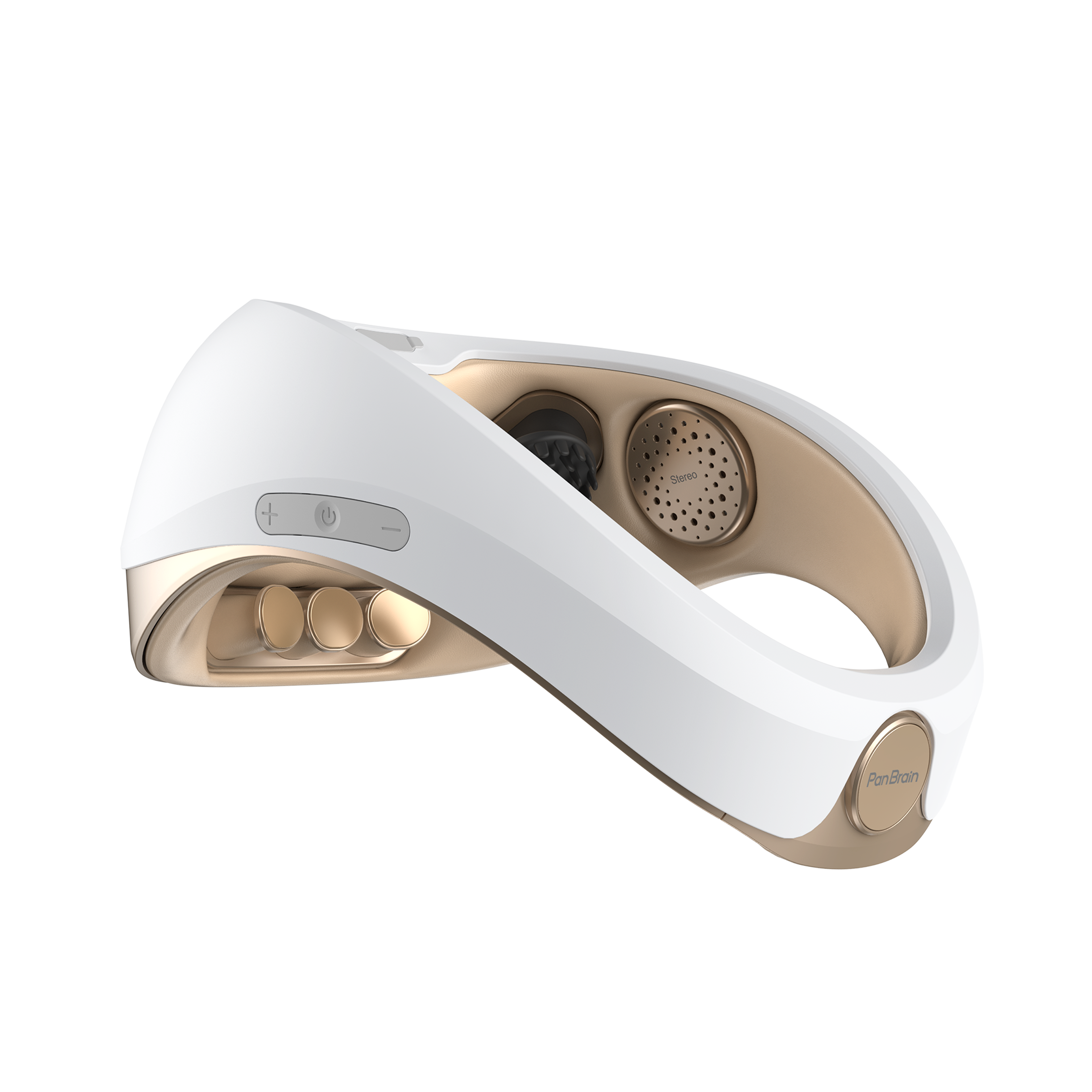
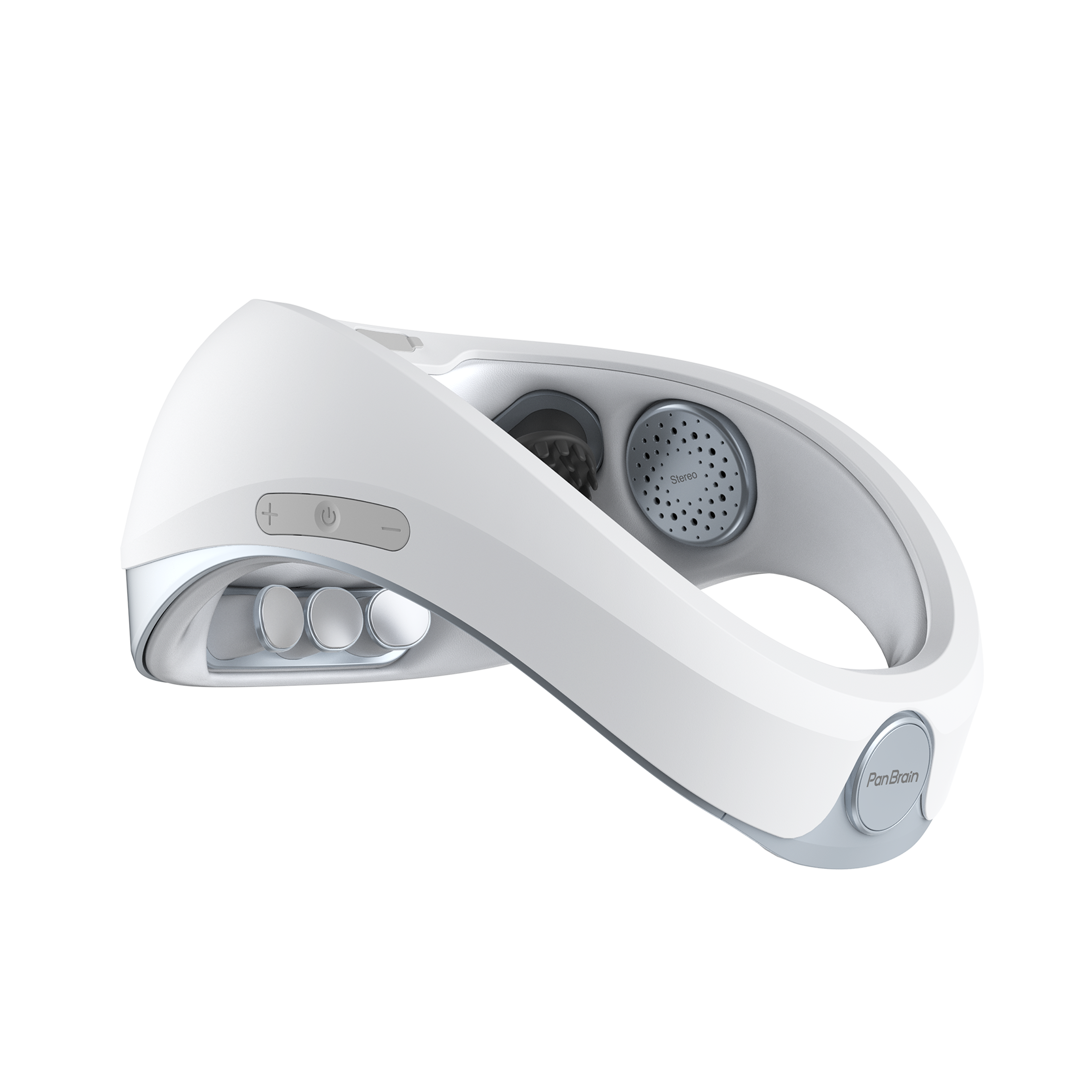
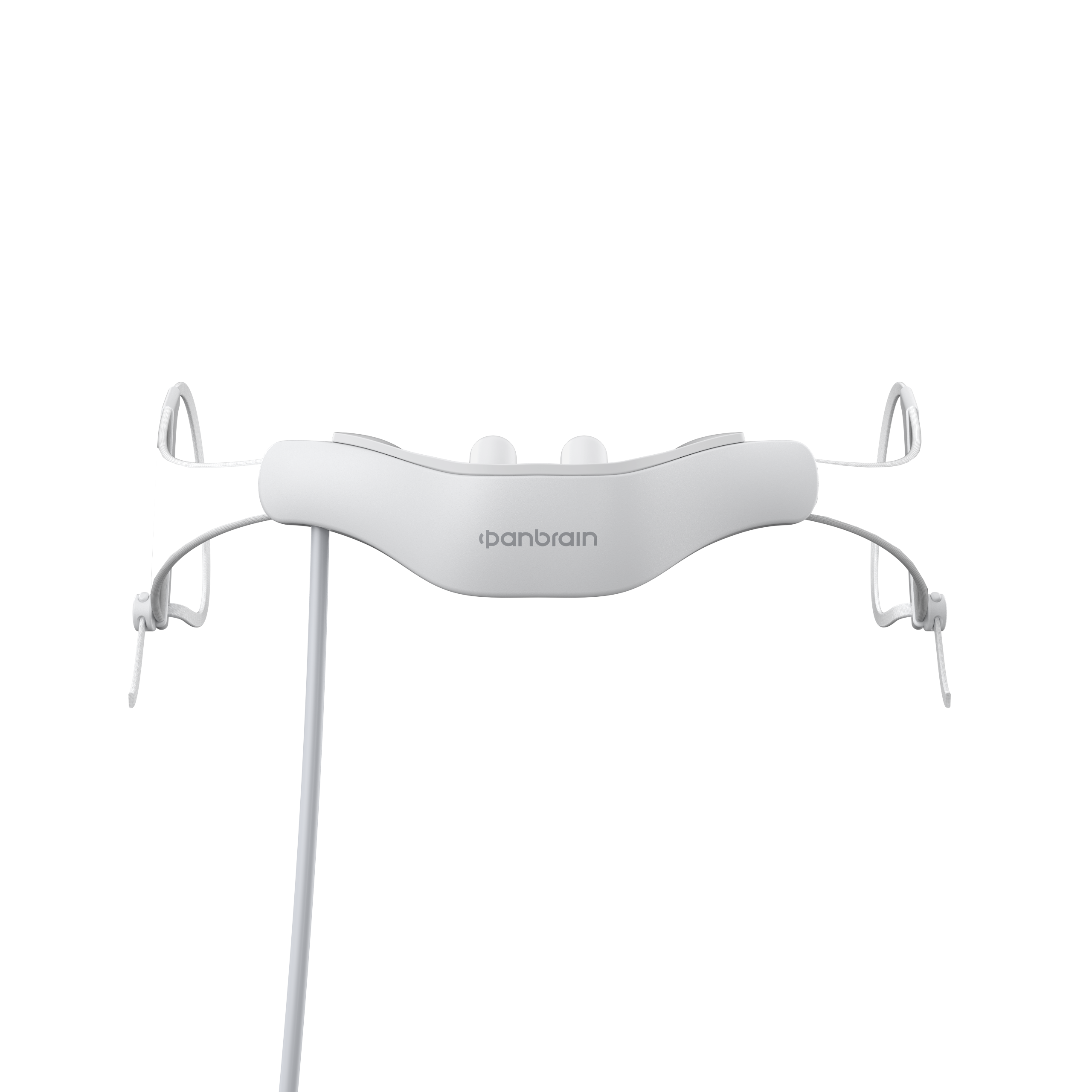
That’s exactly what the Panbrain Energy Capsule (EC2 Blue) does—not by “inventing” thoughts, but by modulating the excitability threshold of your prefrontal neurons through transcranial direct current stimulation (tDCS). The mechanism, backed by decades of neuroscience, works on three levels:
l Electrophysiological tuning – A mild current (1-2 mA) subtly alters resting membrane potentials. Under the anode over the dorsolateral prefrontal cortex (DLPFC), neurons depolarise slightly, becoming more reactive to taskrelevant signals—sharpening working memory and filtering out distractions. The cathode, placed contralaterally, balances this by reducing overactivity, helping you stay on track.
l Synaptic plasticity amplification – The stimulation mimics the brain’s natural learning process, promoting calcium influx and BDNF secretion, which strengthens synaptic connections (a form of longterm potentiation). It also rebalances inhibitory (GABA) and excitatory (glutamate) neurotransmitters, cutting through neural noise so that executive commands come through crisp and clear.
l Network resonance – Although applied to the scalp, the current doesn’t stay local. Through corticocortical pathways, it reaches deeper structures like the striatum and thalamus—a phenomenon known as the farfield network effect. This synchronises your frontal lobes with other regions, making the entire cognitive system work in better harmony.
In essence, tDCS acts not as a stimulant, but as a coach—it primes your prefrontal neurons to respond more efficiently to the very demands you place on them during active learning. Over time, combined with deliberate practice, it can help reinforce the myelination and synaptic consolidation of the circuits you use most.
So while the memory techniques you’ve just learned give your brain the strategy, Panbrain Energy Capsule gives it the readiness—a scientifically grounded edge that works with your biology, not against it. To explore how it fits into your routine, visit our website "panbrain.com" for details.
References
[1]Roediger, H. L., III, & Karpicke, J. D. (2006). Test-enhanced learning: Taking memory tests improves long-term retention. Science, 313(5792), 966–968.
[2]Baddeley, A. D., & Hitch, G. J. (1974). Working memory. In G. H. Bower (Ed.), The psychology of learning and motivation (Vol. 8, pp. 47–89). Academic Press.
[3]Wing, E. A., Marsh, E. J., & Cabeza, R. (2013). Neural correlates of retrieval-based memory enhancement: An fMRI study of the testing effect. Neuropsychologia, 51(12), 2360–2370.
[4]Butterfield, B., & Metcalfe, J. (2001). Errors committed with high confidence are hypercorrected. Journal of Experimental Psychology: Learning, Memory, and Cognition, 27(6), 1491–1494.
[5]Schultz, W., Dayan, P., & Montague, P. R. (1997). A neural substrate of prediction and reward. Science, 275(5306), 1593–1599.
[6]Huelser, B. J., & Metcalfe, J. (2012). Making related errors facilitates learning, but learners do not know it. Memory & Cognition, 40(4), 514–527.
[7]Richland, L. E., Kornell, N., & Kao, L. S. (2009). The pretesting effect: Do unsuccessful retrieval attempts enhance learning? Journal of Experimental Psychology: Applied, 15(3), 243–257.
[8]Meyer, D. E., & Schvaneveldt, R. W. (1971). Facilitation in recognizing pairs of words: Evidence of a dependence between retrieval operations. Journal of Experimental Psychology, 90(2), 227–234.
[9]Was, C. A. (2010). The persistence of content-specific memory operations: Priming effects following a 24-h delay. Psychonomic Bulletin & Review, 17(3), 362–368.
[10]Ramirez, G., & Beilock, S. L. (2011). Writing about testing worries boosts exam performance in the classroom. Science, 331(6014), 211–213.
[11]Nestojko, J. F., Bui, D. C., Kornell, N., & Bjork, E. L. (2014). Expecting to teach enhances learning and organization of knowledge in free recall of text passages. Memory & Cognition, 42(7), 1038–1048.