


Author: Dr. Nailin Yao
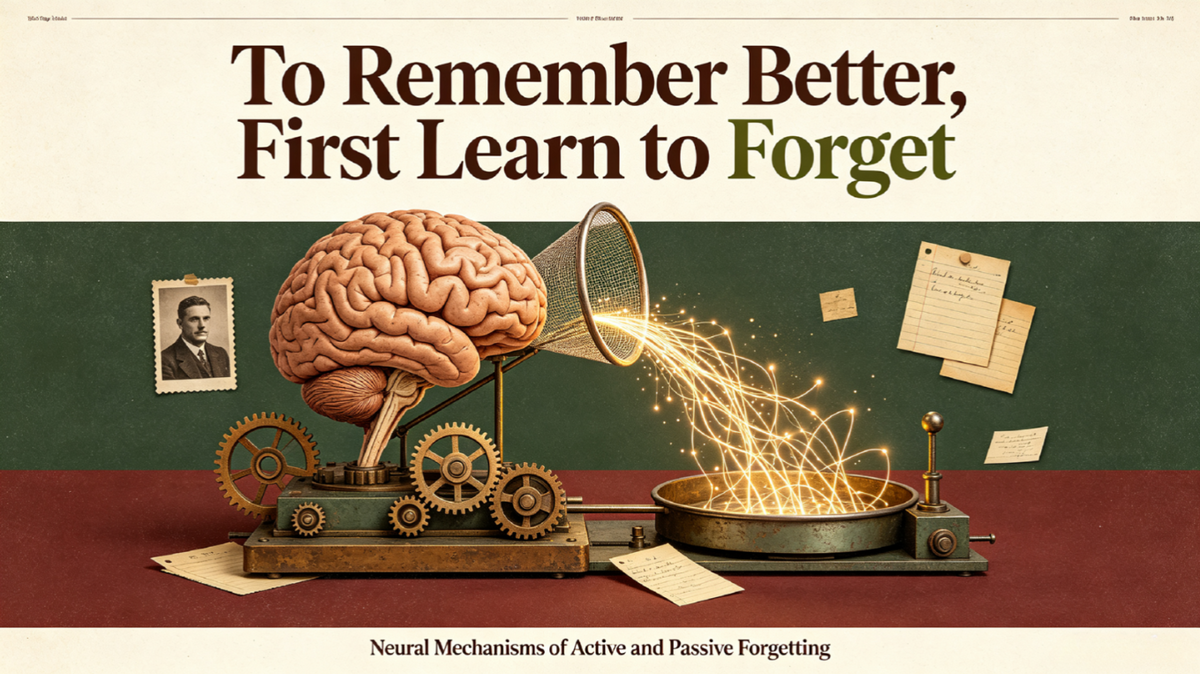
You know that sinking feeling? You’ve just finished a long study session, closed your textbook, and felt on top of the world. A few days later, someone asks you about it—and your mind goes blank. The information evaporated, as if it had never been there. It’s frustrating, even embarrassing. But here’s the twist: that very moment of nearforgetting is actually your brain’s most powerful signal. It’s not a bug—it’s a feature.
What if you could train yourself to catch that signal, and use it to lock information in for good? What if the best time to review something isn’t right after you learn it, but right when it’s about to slip away? There’s a surprisingly simple strategy that does exactly that—and it works because it aligns with how your brain is wired to remember. No extra hours, no superhuman effort. Just a shift in when you review.
Keep reading. Because once you understand this, your studying will never be the same.
First up: spaced repetition. The core idea is simple yet brilliant—by scheduling your review sessions at strategic intervals, you help your brain lock information in more securely. Unlike cramming the night before an exam, this approach gives your memory the time it needs to naturally deepen its roots. If you want knowledge to stay clear and accessible months—or even years—from now, this is a technique you’ll want to master.
There are three key principles to spaced repetition.
Principle 1: Set reasonable time gaps between reviews[1].
Here’s a concrete example: suppose you have eight total hours to prepare for an exam that’s one week away. How you spread those hours makes all the difference. Many people’s first instinct is to study for eight straight hours the day before the test—but that’s cramming, and it usually only builds shortterm recall.
A smarter approach: distribute those eight hours across multiple days. For instance, study about an hour each day, then add an extra hour on the final two days. Or try alternating days—two hours on Monday, Wednesday, and Friday, with a final twohour session on Sunday. Research shows that this kind of spaced review reinforces learning at the critical points of the forgetting curve, leading not only to smoother performance on test day, but also to roughly 40% better retention three months later compared to cramming.
Principle 2: Gradually lengthen the intervals[2].
When you first learn something new, review it the next day, then again on day five. Once the foundation is solid, stretch the gaps to two weeks, then a month. This gradual expansion aligns perfectly with your brain’s natural rhythm of shifting information from shortterm to longterm storage. Think of it like tending a sapling—water it frequently at first, but once the roots are strong, regular maintenance is enough.
Principle 3: Prioritise the quality of each review[3].
Every spaced session shouldn’t be a passive rereading—it should be an active recall exercise. Try to reconstruct the material from memory first, then check your notes to fill in gaps. For example, when reviewing a historical event, outline the timeline and causeeffect relationships on your own, then consult your textbook for missing details. This kind of retrieval practice significantly amplifies the effectiveness of spaced repetition.
Now let’s get into the nuts and bolts of how to design your review intervals.
The core principle of spaced repetition is to catch that sweet spot—right when you're about to forget. The interval shouldn't be so short that your brain gets lazy (it already knows the material), nor so long that the memory has completely evaporated. This means you need to stay flexible. For example, if you review a concept after two weeks and it feels hazy, that gap was too wide. Shorten it to ten days, aiming to still recall about 60% of the content at each review. Think of it like watering a plant—wait until the soil is slightly dry, but don't let it turn to dust.
This approach is built on solid theory—the Ebbinghaus forgetting curve[4]. In the 19th century, psychologist Hermann Ebbinghaus found that newly learned information fades fast: within 20 minutes we retain only 58%; after an hour, 44%; and by day two, just 34%. If we never revisit it, we lose roughly 90% within a week. But that doesn't mean cramming every hour is the answer—the trick is to intervene at the critical points where forgetting is about to take hold.
Take this scenario: you study a topic at 7 a.m., then again at 9 a.m., 11 a.m., and 1 p.m. That's overkill. Why? Because your brain is highly responsive to novelty—it releases dopamine to strengthen new connections—but it gets dulled by rapid repetition[5]. When the same stimulus arrives too soon, your brain treats it as already known and tunes out, which defeats the purpose of learning.
That's why neuroscience recommends progressive intervals: review once after 6 hours, again the next day, then after 3 days, a week, a fortnight, and so on—gradually widening the gaps. This rhythm aligns with the brain's natural decay rate while delivering just enough fresh stimulation at each encounter. Studies show that spaced review groups retain information over three times better than massedpractice groups over the long haul.
Why does this work? Because your brain pays special attention to information that reappears after a meaningful gap. When you retrieve something after some time has passed, your brain senses a mix of familiarity (I've seen this before) and fuzziness (I've forgotten some details). That cognitive dissonance triggers a reinforcement program—it flags the memory for consolidation.
Neuroscientists have observed that during spaced review, certain memoryrelated proteins temporarily become active again[6]. For example, if you revisit a math formula two weeks later, the stable protein networks holding that memory momentarily destabilise, opening a window for editing. New connections can be woven in, and the protein layers stack more neatly—building a stronger, more durable memory network.
Sleep plays a starring role in this process[7]. During deep sleep, your brain acts like a librarian sorting through the day's acquisitions. Information that has appeared repeatedly through spaced review gets tagged as important and transferred to longterm storage; temporary memories that weren't revisited are gradually cleared out. This overnight sorting explains why reviewing just before bed often yields better results—your brain automatically strengthens those marked memories while you sleep.
One crucial insight: your brain's judgment of importance doesn't always match your own. It favours information that recurs naturally over time—the kind that shows up again and again in realworld intervals—rather than dense, shortterm bursts[8]. It's a survival rule: encounters that happen frequently in real life are worth remembering. That's why cramming fades fast, while spaced review—honouring the forgetting curve—builds memories that stick.
So how do you set the optimal review schedule? Scientists have worked this out through extensive experiments. Here’s a concrete takeaway: if you want a piece of knowledge to stay vivid a full year from now, the most effective rhythm is this—review it two days after first learning, then again one week later, then one month later, and finally give it a secondmonth boost. This staircaselike widening of gaps allows the memory proteins to be reactivated and restacked at each encounter, gradually building a rocksolid longterm structure.
The magic lies in hitting that “on the verge of forgetting” sweet spot. Don’t worry if some details slip away between reviews—a little forgetting is actually helpful. It triggers your brain’s priority system. If, when you revisit the material, you can still recall about 60% of it, you’ve nailed the interval.
For different exam timelines, here’s a practical guide:
l One week to go: review key points every 2448 hours.
l One month to go: two systematic reviews per week work best.
l Sixmonth certification prep: invest 34 hours per month on focused review of core topics—and you’ll see meaningful results.
One critical note: quality trumps frequency every time. At each review session, make sure you meet two standards—first, you can explain the core content in your own words without looking; second, you can apply it to solve problems[9]. For instance, when reviewing a physics formula, don’t just write it down—work through derivations and tackle sample problems. A deep review like this, even after a twomonth gap, beats a shallow weekly onceover hands down.
A study tracked two groups of language learners: Group A studied vocabulary for 30 minutes every day, while Group B studied twice a week for 105 minutes per session. Six months later, Group B retained 37% more words than Group A. That shows that lengthening the interval doesn’t hurt retention—it actually helps your brain integrate information more efficiently. The key is reaching sufficient cognitive depth each time you engage, so that the memory proteins form stable, wellwoven networks.
Now, why does spaced repetition create such durable memories? Let’s look under the hood. Every time you recall something, you’re essentially reactivating and finetuning a neural network. As we discussed earlier, memory formation relies on specific protein structures that fold into stable carriers.
When you revisit a concept after a twoday gap, your brain triggers a special recognition mechanism—the protein assemblies linked to that knowledge are reactivated and enter a plastic, modifiable state[10]. In this state, they’re like software modules waiting for updates: they keep their basic framework but are now open to integrating new information. That’s the key role of spaced review. As you open your notes and review, the old memory structure interacts with the fresh input. Neuroscience shows that this interaction leads to subtle adjustments in the protein configurations, weaving new details into the existing fabric. For example, when you review a historical event a second time, you might notice a nuance you missed before—and that new detail gets embedded into the original memory scaffold.
This dynamic process explains the unique advantage of spaced repetition. Each review isn’t a mindless repeat—it’s a continuous upgrade of your memory architecture. Think of it like a building renovation: you keep the main structure intact, but with each visit you reinforce the loadbearing beams. Through repeated, spaced activations, your brain gradually transforms temporary memories into robust neural circuits that stand the test of time.
That transformation—from fleeting activation to lasting neural circuitry—demands more than just a good schedule. It requires your brain to be in an optimal state during review, and equally important, during the sleep that follows. This is where neurotechnology can offer a scientifically grounded edge.
The Panbrain Energy Capsule (EC2 Blue ) works through transcranial direct current stimulation (tDCS)—a safe, noninvasive method used in leading research centres. A gentle 1-2 mA current is applied to your dorsolateral prefrontal cortex (DLPFC). This does not “create” thoughts; instead, it subtly shifts the resting membrane potential of neurons, making them more responsive to taskrelevant signals. The effect is twofold: synaptic plasticity is enhanced through calcium influx and BDNF release, mimicking the brain’s own learning mechanisms; and the balance between inhibitory (GABA) and excitatory (glutamate) neurotransmitters is finetuned, cutting through neural noise. In essence, it primes your frontal lobes to get more out of every spaced review session.
But daytime focus is only half the equation. The Panbrain Lume targets the nightside of memory consolidation. Using photobiomodulation (PBM) with 810nm nearinfrared light delivered through the nasal cavity, it gently stimulates prefrontal regions to boost mitochondrial ATP production. This helps restore your brain’s natural circadian rhythm, deepening the slowwave sleep during which memory proteins are restacked and stabilised. The result: you wake up with a clearer mind, ready to retain what you reviewed.
Together, these two devices work with your biology—not as shortcuts, but as precision tools that align with the very mechanisms we’ve explored: protein reactivation, synaptic strengthening, and sleepdependent consolidation. They give your brain the readiness it needs, so that every moment of spaced repetition becomes a step toward lasting mastery.
For more details on how they might fit into your routine, feel free to visit our website "panbrain.com". Because when your brain is primed, the forgetting curve isn’t a hurdle—it’s a roadmap.
References
[1]Cepeda, N. J., Vul, E., Rohrer, D., Wixted, J. T., & Pashler, H. (2008). Spacing effects in learning: A temporal ridgeline of optimal retention. Psychological Science, 19(11), 1095–1102.
[2]Karpicke, J. D., & Roediger, H. L., III. (2007). Expanding retrieval practice promotes short-term retention, but equally spaced retrieval enhances long-term retention. Journal of Experimental Psychology: Learning, Memory, and Cognition, 33(4), 704–719.
[3]Butler, A. C., Karpicke, J. D., & Roediger, H. L., III. (2008). Correcting a metacognitive error: Feedback increases retention of low-confidence correct responses. Journal of Experimental Psychology: Learning, Memory, and Cognition, 34(4), 918–928.
[4]Ebbinghaus, H. (1913). Memory: A contribution to experimental psychology (H. A. Ruger & C. E. Bussenius, Trans.). Teachers College, Columbia University. (Original work published 1885).
[5]Bunzeck, N., & Düzel, E. (2006). Absolute coding of stimulus novelty in the human substantia nigra/VTA. Neuron, 51(3), 369–379.
[6]Si, K., Lindquist, S., & Kandel, E. R. (2003). A neuronal isoform of the Aplysia CPEB has prion-like properties. Cell, 115(7), 879–891.
[7]Mazza, S., Gerbier, E., Gustin, M.-P., Kasikci, Z., Koenig, O., Toppino, T. C., & Magnin, M. (2016). Relearn faster and retain longer: Along with practice, sleep makes perfect. Psychological Science, 27(10), 1321–1330.
[8]Wimmer, G. E., Li, J. K., Gorgolewski, K. J., & Poldrack, R. A. (2018). Reward learning over weeks versus minutes increases the neural representation of value in the human brain. The Journal of Neuroscience, 38(35), 7649–7666.
[9]Karpicke, J. D., & Roediger, H. L., III. (2007). Repeated retrieval during learning is the key to long-term retention. Journal of Memory and Language, 57(2), 151–162.
[10]Nader, K., Schafe, G. E., & LeDoux, J. E. (2000). Fear memories require protein synthesis in the amygdala for reconsolidation after retrieval. Nature, 406(6797), 722–726.