
Author: Dr. Nailin Yao
You're sitting at your desk, staring at a blank screen. You know there's a brilliant idea in there somewhere—but no matter how hard you push, your mind stays stubbornly empty. Then, an hour later, while you're washing dishes or taking a shower, that same idea floats into your head like it was there all along.
That moment—the one where effort fails and ease succeeds—isn't a fluke. It's a window into one of the most fascinating systems in your brain: the network that governs creativity. And the secret to unlocking it might not be what you think. It's not about trying harder. It's about knowing when to let go.
In this article, we're going to explore what creativity really is, how your brain generates it, and why some of your best ideas come when you're not even trying. By the end, you'll understand not just how to be more creative—but how to work with your brain's natural rhythms instead of against them.
What exactly is creativity? Back in 1950, Dr. Joy Paul Guilford offered a foundational answer. Through his research, he identified two complementary components that make up creativity.
The first is divergent thinking[1]—the ability to start from a single point and let your mind ripple outward in expanding circles. Take a simple napkin on a table. One person might think of paper, which leads to wood processing, then to forest ecosystems, and eventually to climate change and its impact on the planet. This chain of associations, triggered by an everyday object, works like a mental mind map—weaving seemingly unrelated things into a single web of thought.
The second is selective retention[2]. During the creative process, when dozens or even hundreds of ideas surface in your mind, a screening mechanism kicks in. You carefully judge which ideas actually solve the problem and which are just fanciful daydreams. Take that same napkin association: an environmental expert might focus on forest conservation, while a product designer might zoom in on improving paper-based materials.
So creativity is never just aimless fantasy. Pure divergent thinking is like scattered pearls—only when strung together through selection do they become a valuable necklace. Truly meaningful creativity must take root in reality. It demands both the courage to expand your mental boundaries and the wisdom to lock onto the core of a problem. This dual ability—to roam freely and focus precisely—is the engine that drives human problem-solving.
Interestingly, the process of creativity closely mirrors Darwin's theory of natural selection. At its core, it's a process of "survival of the fittest."
In nature, every living organism carries vast amounts of genetic information—primarily in the form of DNA. Interestingly, DNA replication is never perfectly accurate. Random, small errors creep in regularly—a phenomenon known as random drift. But don't mistake these errors for something bad. On the contrary, it's precisely these imperfect variations that provide the raw material for natural selection. Nature acts like an experienced gardener, continuously selecting the gene combinations that best fit the current environment from the everchanging pool of genetic variation. For example, during periods of climate change, mutations that happened to offer better temperature adaptation were preserved. Generation after generation, this screening process shaped the rich diversity of life we see today.
This natural principle offers us an important insight: making mistakes is a valuable process[3]. Without billions of years of genetic replication errors, Earth might still be home to only the most primitive life forms. It's this continuous stream of trial and error that has supplied the essential raw materials for evolution.
Creativity follows the same underlying logic. When we try to innovate, we're essentially making random combinations within our existing knowledge base. Just as biological evolution relies on DNA as its foundation, our innovations rely on the knowledge structures we've already built. Most of these attempts may not work out—but the key is to allow ourselves to generate enough "mental variations."
Take Thomas Edison as an example. When inventing the light bulb, he tested thousands of filament materials. The vast majority of his experiments failed. But it was precisely through this massive trial-and-error process that he eventually identified tungsten as the optimal solution. Creativity isn't a sudden flash of inspiration—it's more like gold panning: sifting through tons of gravel to find the few precious nuggets. This process of divergent experimentation followed by selective retention is essentially the evolutionary path of human intelligence.
To understand how creativity works in the brain, we need to look at a system that works in partnership with the attentional networks—the default mode network, or DMN for short[4]. This network operates in a way that's quite different from what we typically think of as "brain work."
Scientists only uncovered this network's secrets in the last two decades. In one revealing experiment, participants lay inside an MRI scanner waiting for a task to begin. The researchers expected the brain to be in a "standby state"—but the monitoring screens showed something surprising: brain activity didn't drop. In fact, it was higher than when participants were actively engaged in tasks.
By analysing these signals carefully, researchers noticed that when people were relaxed, specific regions became particularly active: the ventromedial prefrontal cortex, the posterior cingulate cortex, and both the temporal lobes and the hippocampus. These areas work together like wellcoordinated partners, forming what we now call the "default mode network." What's especially interesting is that this network is most active when we're daydreaming, recalling memories, or letting our minds wander—and many creative insights are born in these unguarded moments[5].
This seemingly scattered mental state actually holds the key to creativity. When the default mode network switches on, it acts like a bridge, connecting distant brain regions and enabling conversations between areas that don't usually communicate. For example, the hippocampus, which handles memory, and the prefrontal cortex, which manages emotion, start forming new combinations of information under these conditions—and that's the biological foundation of creative insight.
 As shown in brain network diagrams, DMN activity engages multiple regions across the front, back, and sides of the brain. When the default mode network is active, information from different sources can connect with each other—and that's exactly the key to creativity.
To understand how creativity operates in the brain, we first need to meet a pair of balancing partners: the creativity-friendly default mode network and the focus-driven executive network. These two networks are in constant tension, working like a seesaw—when one is active, the other quiets down.
When we're fully absorbed in a task—like listening carefully in class, memorising vocabulary, or putting together a presentation—the brain's central executive network takes charge. At that moment, your thinking becomes concentrated and efficient. Meanwhile, the default mode network, responsible for freeflowing associations, is effectively paused. Conversely, when you set down your task and let your mind wander freely—like dandelion seeds drifting on the wind—the executive network steps back, and the default mode network takes over. Seemingly unrelated thoughts start to collide and combine, and that's exactly when creative sparks often flash.
Many of us have experienced this: the harder we chase inspiration, the more it eludes us. That's because when we deliberately pursue creativity, we end up activating the logic-and-control driven executive network—like grasping at sand; the tighter your grip, the more it slips away. The very act of straining for inspiration puts a harness on your mind[6].
Artists often report that their best work emerges from moments of relaxation—watching clouds shift shape on a park bench, or brewing tea while listening to rain. These experiences confirm a rule: creativity needs room to roam. Like seeds that require loose soil to sprout, your brain needs space for ideas to grow. When we learn to let go of the urgency for results, we create the breathing room that inspiration needs to flourish.
When it comes to which network takes charge, neither is the absolute ruler. These two competing systems are actually regulated by a third system—the alerting network—which acts like a dimmer switch, adjusting the balance of activity between them[7].
In those with attention regulation patterns, the typical seesaw relationship between the default mode network and the executive network isn't as clearly defined. That is, when they're focused on completing a task, their brains don't suppress the default mode network as strongly as most people's do. This leads to a distinctive mental state: their attention is partially on the current task, while at the same time, their minds are unconsciously making loose, divergent associations.
This unique neural activity pattern has two sides. On the positive side, the constantly active default mode network makes it easier for their thoughts to make creative leaps between different concepts—for instance, while solving a math problem, they might suddenly connect it to an unrelated everyday scene, sparking a fresh solution.
On the other hand, the reduced regulatory power of the executive network makes it harder for them to stay focused on tasks that require sustained attention—like memorising a passage or taking a standardised test. This often leads to academic performance that falls short of what their intelligence test scores would predict. This contradiction—high creative potential but inconsistent everyday performance—is the neuroscientific foundation behind this gap.
To effectively stimulate and capture inspiration, we need to understand the brain's "conductor"—the alerting network. Like a symphony orchestra conductor, this network coordinates the activity of different brain regions.
Let's start with the insula. Located on both sides of the brain and shaped like a small shell, the insula constantly senses internal bodily changes[8]. When you notice your heart racing, your stomach tightening, or suddenly realise you're sitting uncomfortably—that's your insula at work. This region also helps us maintain balance during movement, such as adjusting our centre of gravity when crossing a narrow bridge.
Next is the anterior cingulate cortex, which acts like the brain's conflict mediator[9]. For example, when a teacher explains something that contradicts common sense—like 1+1=3—this region lights up with an alert signal. It doesn't just detect the clash between old and new knowledge; it also pushes us to seek an explanation, like wondering if the teacher is teaching a special number system.
The third key region is the amygdala, an almondsized structure that processes danger signals and novelty[10]. When you hear an unexpected sound in an unfamiliar alley, it makes you instantly alert. Likewise, when you spot a plant you've never seen before, it compels you to stop and observe. This sensitivity to both threat and novelty provides raw material for capturing inspiration.
Finally, there's the ventral tegmental area, which governs the brain's reward system and directly influences our motivation[11]. When you complete a goal or discover something interesting, it releases dopamine, keeping your exploration alive. This positive feedback loop is what drives us to keep trying new possibilities.
Together, these regions form the alerting network. It acts like an experienced dispatcher, dynamically allocating brain resources—directing energy to the executive network for focused tasks, or switching to the default mode network for freeflowing association. Understanding this switching mechanism helps us better grasp the rhythm of creativity: knowing when to concentrate and when to relax and let inspiration emerge naturally.
There's a common phenomenon that's noticeably less pronounced in highly creative individuals. It's called the repetition suppression effect. In simple terms, when we encounter the same thing repeatedly, our brain automatically lowers its excitement level[12]. For example, the first time you attend a class, it feels fresh and interesting—but watching the same recorded lecture later on makes it easier to zone out, because your brain thinks it already knows the material and stops investing attention. This mechanism originally evolved to save energy, preventing the brain from overexerting itself on familiar things.
But highly creative people are different in this regard. Their brains don't lose interest in repeated stimuli as easily. They have a particular ability—always finding new details in familiar things. Take a daily walk through the same park: most people, over time, stop noticing whether a tree has sprouted new leaves, whether wildflowers have bloomed on the grass, or whether the soil carries that distinctive postrain scent.
But creative individuals, even when passing by every single day, still pause for the dancing shadows of trees, delight at an unexpected wildflower, and notice when a stray cat has moved to a new sunny spot. Their brains act like spotlights that stay on, continuously scanning for subtle changes in their environment. This trait reveals different layers in everyday scenes and sparks fresh ideas even in familiar places.
Because their repetition suppression effect is weaker, their brains remain in a state of receptivity to new information. This ability to continuously capture subtle changes provides a constant stream of nourishment for creativity. While most people think "that's just how it is," creative individuals find the extraordinary in the ordinary—and this is one of creativity's most important sources.
There's a common phenomenon that's noticeably less pronounced in highly creative individuals. It's called the repetition suppression effect. In simple terms, when we encounter the same thing repeatedly, our brain automatically lowers its excitement level. For example, the first time you attend a class, it feels fresh and interesting—but watching the same recorded lecture later on makes it easier to zone out, because your brain thinks it already knows the material and stops investing attention. This mechanism originally evolved to save energy, preventing the brain from overexerting itself on familiar things.
But highly creative people are different in this regard. Their brains don't lose interest in repeated stimuli as easily. They have a particular ability—always finding new details in familiar things. Take a daily walk through the same park: most people, over time, stop noticing whether a tree has sprouted new leaves, whether wildflowers have bloomed on the grass, or whether the soil carries that distinctive postrain scent.
But creative individuals, even when passing by every single day, still pause for the dancing shadows of trees, delight at an unexpected wildflower, and notice when a stray cat has moved to a new sunny spot. Their brains act like spotlights that stay on, continuously scanning for subtle changes in their environment. This trait reveals different layers in everyday scenes and sparks fresh ideas even in familiar places.
Because their repetition suppression effect is weaker, their brains remain in a state of receptivity to new information. This ability to continuously capture subtle changes provides a constant stream of nourishment for creativity. While most people think "that's just how it is," creative individuals find the extraordinary in the ordinary—and this is one of creativity's most important sources.
So how can we effectively boost our creativity?
First, actively create psychological distance[13]. Psychological distance has three dimensions: temporal distance (imagining a span from now to one year or even a decade later); spatial distance (geographical differences, such as between regions or countries); and social distance (shifting between your own perspective and someone else's). By deliberately adopting another person's viewpoint to examine your own situation, you can effectively stimulate creativity.
A classic creativity experiment from Indiana University demonstrated this. Researchers challenged participants to solve a puzzle: a prisoner trapped in a high tower with only half the rope length needed to escape—how could they get down? Interestingly, two groups were given different framing: Group A was told the problem was from a local source, while Group B was told it came from students at the University of California. This seemingly minor background detail led to significant differences in performance. The results showed that participants who believed the problem came from a distant location solved it faster and more accurately. The clever solution: unravelling the rope into individual strands and rebraiding them to achieve the needed length. This proved the moderating effect of psychological distance—when a problem is framed as coming from far away, people find it easier to break free from fixed thinking patterns.
Now consider temporal distance in practice. When you're stuck on a tough problem, try stepping out of the immediate pressure and imagining the challenge as something your future self—one year from now—will face. This temporal detachment helps your brain shift from a narrow, detail-obsessed critical mode to a looser, more creative mode. When time feels close, we get bogged down in specifics; when we pull back the timeline, our brains lean toward abstract thinking, making unconventional solutions more accessible.
It's worth noting that these three dimensions of psychological distance don't exist in isolation. In practice, you can combine temporal, spatial, and social perspectives. For example, imagine how your future self—living in a foreign country ten years from now—would view your current difficulty. This stacking of multiple psychological distances often makes the creativity-boosting effect even stronger.
Second, to maintain good creativity, avoid excessive tension and the urge to control everything[1]. When mental tension rises, your brain feels threatened—the amygdala becomes overactive, forcing the brain into analysis mode, narrowing your attention to deal with the immediate "danger." As a result, your brain can't access "unrelated" information for creative thinking. The tighter the deadline, the more your creativity tends to suffer.
Genuinely good ideas often emerge in a state that's both safe and slightly open. At these times, multiple brain regions activate simultaneously—like different sections of an orchestra beginning to play together. These regions start connecting and synchronising, eventually integrating into completely new combinations. Those "aha" moments are actually the default mode network operating freely. The drowsy state just before falling asleep, or the wandering mind during a walk—these relaxed conditions are exactly where innovative ideas hatch.
The importance of solitude for creative thinking is no less than that of social interaction. Both have irreplaceable roles. Studies show that when people spend time alone in natural settings, their creativity test scores improve by an average of 50%. So next time you hit a creative block, take a walk in a nearby park—you never know what inspiration might be waiting around the corner. If you're working indoors for long periods, remember to take regular breaks: get a glass of water, listen to soft music, or practise five minutes of mindful breathing. These simple adjustments can often open up fresh mental pathways.
Beyond that, there's a particularly useful technique for boosting creativity: setting constraints[14]. Why would imposing limits on yourself actually enhance creativity? It sounds contradictory, especially after we just discussed how excessive control can suppress it.
But creativity actually needs a certain degree of constraint as a fulcrum. Just as evolution never happens out of thin air—imagine bacterial reproduction; it always starts with a parent cell as the foundation before division and evolution can occur—creativity requires clear starting and ending points as its framework. Take writing a novel: if you only have a vague ambition to create a great work, you could sit in front of a computer for months without typing a single line. But if you first set the beginning and ending points—like anchoring a piece of string at both ends to hold the candy in the middle—the wrapping in between becomes much more playful and creative.
This approach works by giving your brain anchors for memory and imagination. Human creative thinking is essentially the process of generating new ideas through random activation and recombination of existing experiences. This relates to a psychological concept called priming. Simply put, when you give your brain an initial stimulus, all subsequent thinking is influenced by it. For example, if you know in advance that a character in a show will eventually turn evil, you'll start interpreting every gesture as suspicious. Or if you're asked to design a new fruit and someone says "just invent anything," you might feel stuck. But if they say "start by combining an apple and a banana," you instantly picture an appnana—then naturally move on to apple + orange, orange + grapefruit, and so on. New ideas start flowing.
The key is that starting point. Once you have a clear direction, your brain can expand along a defined path. Returning to the writing example: if you establish that the story will end with the protagonist finding life's true meaning, the writer naturally starts asking: "What experiences would lead them to that realisation?" But without those constraints, you could spend hours circling in empty daydreams, never taking the first step. So reasonable constraints aren't cages—they're springboards for creativity.
Learning to spot patterns also helps unlock creativity[1]. This is closely tied to the brain's natural affinity for patternseeking. Think about dating—we can't help but analyse behavioural patterns. Does that message mean they're interested? Does that gesture at dinner mean they like you? This pattern-seeking process not only brings a sense of reassurance but also triggers dopamine release, which helps adjust the "signal-to-noise" ratio in the brain—like tuning a radio to make your preferred station come through clearly. When signal quality improves, creative ideas emerge more readily.
To activate this state, you can set yourself pattern-finding tasks. For example, observe the walking rhythms of pedestrians on your daily commute, or analyse how items are arranged on supermarket shelves. At the same time, make sure to do things you enjoy—whether it's painting or building with Lego—these pleasurable experiences also stimulate dopamine release, giving your creativity a steady recharge.
When it comes to creativity, techniques alone aren't enough—the key is having a sufficient "inventory of raw material." High-level creativity is like a rich ecosystem in nature; it requires the longterm accumulation of quality material[15]. Imagine you have two pools in your mind: one is a muddy pond, capable of supporting only small fish and shrimp; the other is an ocean, home to coral reefs and whales. If you want your creativity to be as rich and diverse as ocean life, you need to keep feeding the pool with quality material—the quality of that material directly determines the level of your creative output. After all, creativity is what results from recombining the knowledge you've absorbed.
So what should you do? Set aside dedicated time every day to explore new fields. For example, read 30 pages of a book completely unrelated to your work—whether a philosophical story or a textbook on theoretical physics. This kind of crossdisciplinary exposure is particularly effective at activating thinking. And finally, remember that creativity takes time—like brewing wine[16]. Sometimes you sit at your desk thinking hard and getting nowhere—but when you're walking or cooking, a great idea suddenly appears. That's because your brain is processing information in the background, and hours, months, or even years later, those accumulated materials combine in unexpected ways. So don't rush—give your ideas enough time to ferment, and they'll blossom when the moment is right.
To maximise your creativity, you can follow these steps:
First, give your brain a clear task[17]—for example, if you need to come up with an engaging article title, write down the specific requirements on paper. Next, set aside two to three hours—or up to half a day—of free time. During this period, do some light physical activity: take a hot shower, walk around your neighbourhood, or tidy up your room. This isn't slacking off—there's science behind it. If you continue doing mentally demanding work, your executive network stays active, and the default mode network—the one responsible for free-flowing association—never gets a chance to activate. But if you completely space out—say, slumping on the sofa staring into space—you might feel relaxed at first, but eventually you'll either get drowsy or start worrying: "What if I can't think of anything?" So moderate, light activity gives your brain a steady anchor—keeping you awake but not tense—allowing your subconscious material to naturally ferment. During this time, your brain is actually working behind the scenes, recombining scattered bits of information.
After two or three hours, when you sit back down at your desk, something remarkable happens. That blank document suddenly has five or six alternative titles waiting for you—and you might not even be able to explain where they came from. That's because your subconscious completed the information integration while you appeared to be resting. So nurturing creativity doesn't require constant vigilance—like growing flowers, you shouldn't dig them up every day to check the roots. Sometimes letting go brings the greatest surprises. Remember, your subconscious may be far more capable than you realise—the key is giving it the right environment to work.
Beyond working on your own, finding people who can spark inspiration in each other is also important[18]. We can see this from changes in work patterns after the pandemic. With remote work becoming widespread, tech company executives noticed a clear trend: employees' creative output had noticeably declined. It wasn't because people had become lazier—it was because they were missing the spontaneous interactions that happen around the water cooler, or the casual discussions before and after meetings. It's precisely these unplanned exchanges that often spark creative breakthroughs.
Steve Jobs's office design at Apple is a classic example. He deliberately placed the bathrooms at the intersection of different departments, betting that engineers and designers would run into each other while washing their hands—and that chance encounter might spark a conversation about a new product idea. This reminds us how important it is to regularly connect with people from different fields. For instance, a tech professional grabbing coffee with an artist, or a researcher chatting with an entrepreneur—these crossdisciplinary conversations often open up entirely new ways of thinking.
When it comes to sustaining creativity over the long term, there's one counterintuitive factor: frustration. We all want things to go smoothly, but what really drives innovation is often those moments when we get stuck. Because creativity is fundamentally about breaking conventions—and when everything's going too smoothly, we don't feel the need to change our existing patterns. It's like when a printer jams, forcing you to figure out cloud-based document sharing; or when a project goes over budget, compelling the team to come up with a more economical solution. These innovations, born out of obstacles, often become the starting point for breakthroughs.
So when you hit a difficult spot, try not to get frustrated too quickly. These challenges are actually your brain's way of signalling that there's an unresolved puzzle waiting to be explored. When a problem stays on your mind, your brain continues searching through memory and combining information in the background. Maybe one day while walking, or in a moment during a shower, the solution suddenly appears. This process is like seeds in the soil quietly gathering strength—they will eventually break through the surface. So sustaining creativity isn't just about sunshine and rain—it also needs these rough stones to sharpen your edge.
Creativity isn't magic—it's the product of a finely tuned balance between two opposing networks in your brain: the default mode network, which weaves far-flung ideas together, and the executive network, which keeps you focused and on track. The alerting network acts as the conductor, switching between them at just the right moments. When these systems work in harmony, inspiration flows.
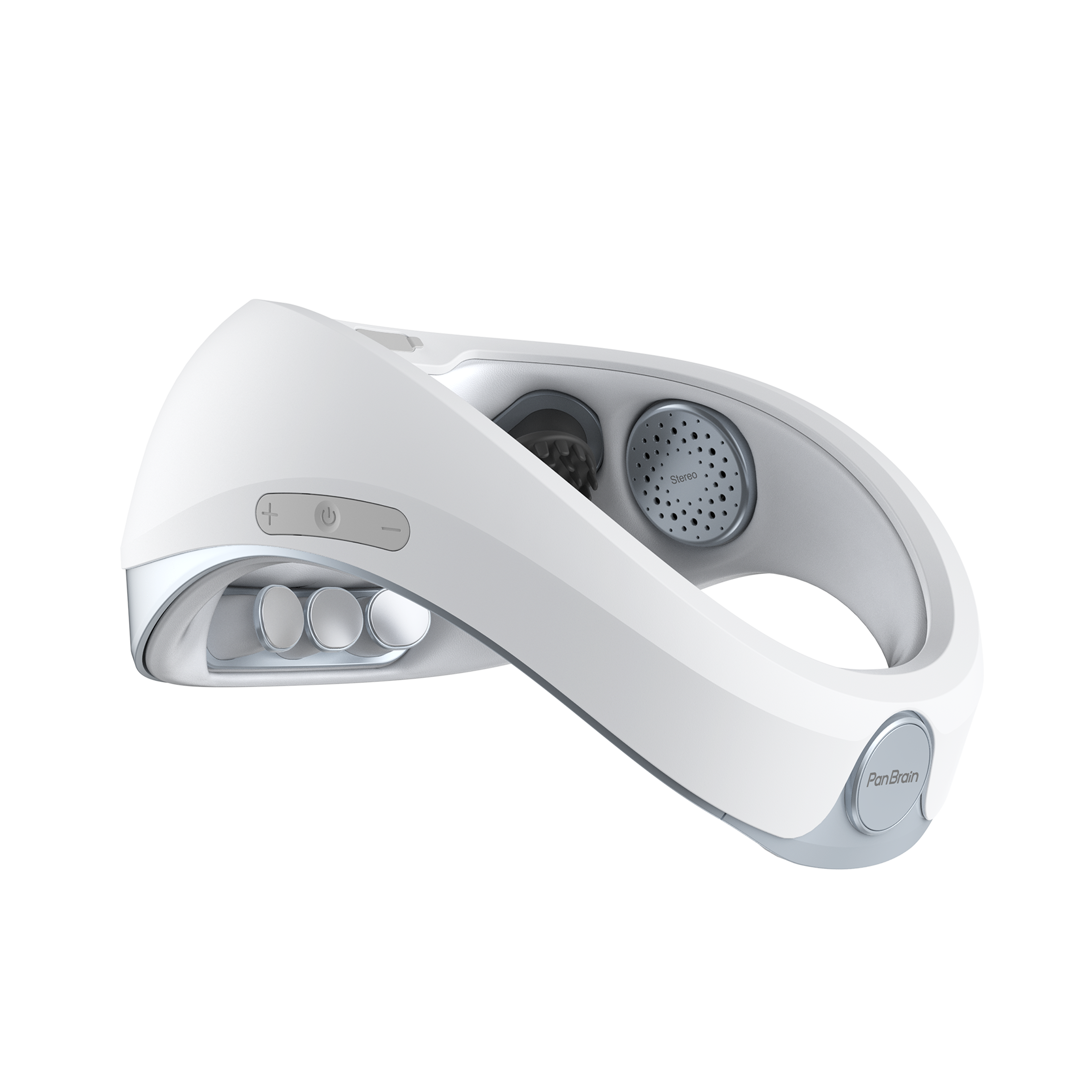
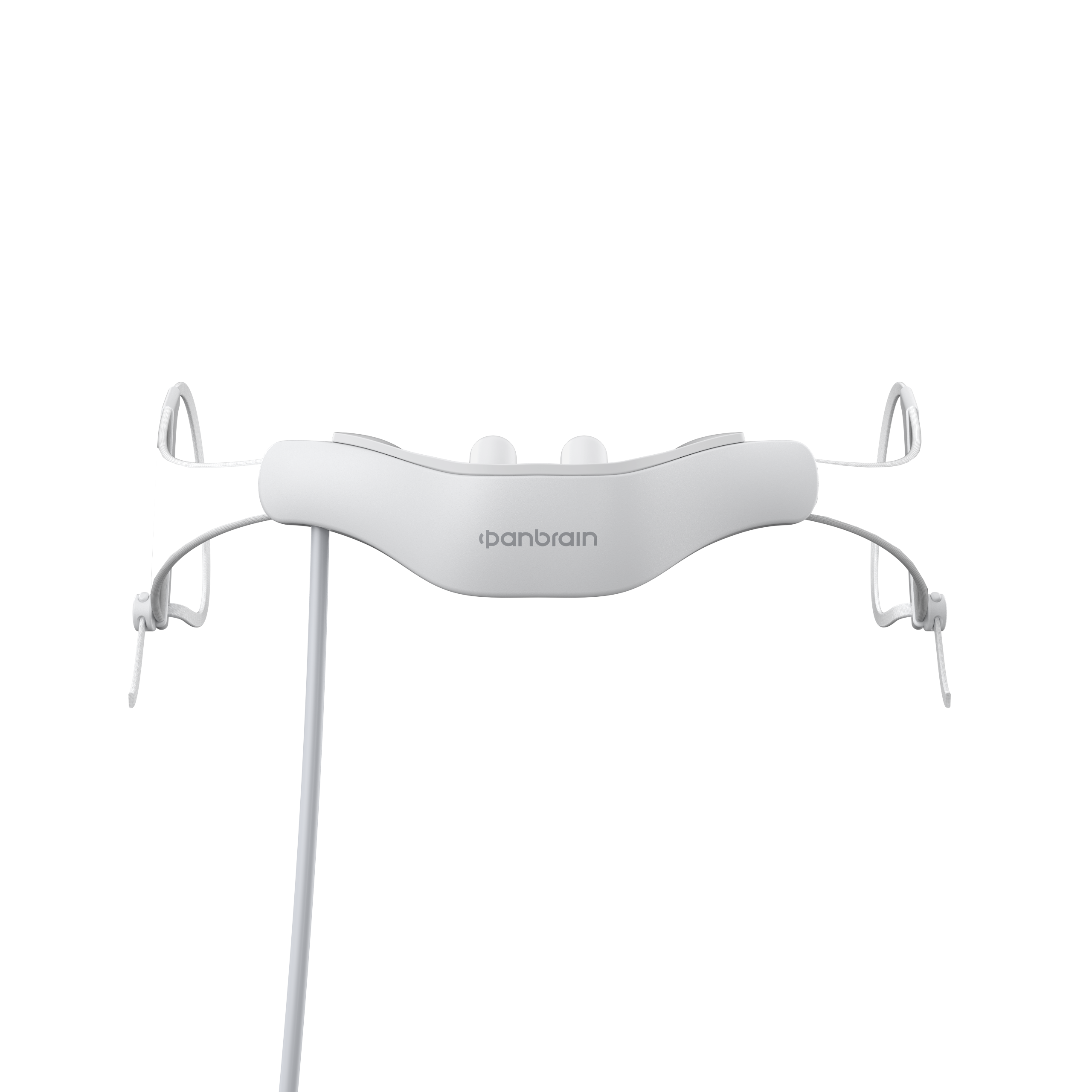
That's where the Panbrain Energy Capsule (EC2 Blue Cognition) and Panbrain Energy Capsule (EC2 Gold Energy)come in.
The Panbrain EC2 Blue is designed to support the prefrontal cortex—the heart of your executive network. Using transcranial direct current stimulation (tDCS)—a safe, noninvasive method validated in leading research centres—it delivers a gentle current to the dorsolateral prefrontal cortex, lowering the activation threshold of neurons so they respond more readily to the tasks you choose to focus on. It promotes calcium influx and BDNF release, reinforcing long-term potentiation—the same mechanism that underlies learning and memory consolidation. In short, it helps you stay in the driver's seat when concentration matters most.
The Panbrain EC2 Gold takes a complementary approach. As we discussed earlier, when mental tension or overwhelming stress takes over, the alerting network can suppress creative thinking—shifting your brain into survival mode rather than exploration mode. Gold Energy targets the prefrontal-limbic circuitry that connects executive control with deeper emotional centres, gently steadying the "background noise" that keeps your brain stuck in alarm mode. This allows the default mode network the space it needs to roam—so inspiration can find its way in.
Together, Blue and Gold work with your brain's natural rhythms—one sharpens your focus when you need to bear down, the other helps create the relaxed, open state where creativity flourishes.
References
[1]Beaty, R. E., Silvia, P. J., Nusbaum, E. C., Jauk, E., & Benedek, M. (2014). The roles of associative and executive processes in creative cognition. Memory & Cognition, 42(7), 1186–1197.
[2]Ellamil, M., Dobson, C., Beeman, M., & Christoff, K. (2012). Evaluative and generative modes of thought during the creative process. NeuroImage, 59(2), 1783–1794.
[3]Robledo, I. C., Hester, K. S., Peterson, D. R., Barrett, J. D., Day, E. A., Hougen, D. P., & Mumford, M. D. (2012). Errors and understanding: The effects of error-management training on creative problem-solving. Creativity Research Journal, 24(2–3), 220–234.
[4]Raichle, M. E., MacLeod, A. M., Snyder, A. Z., Powers, W. J., Gusnard, D. A., & Shulman, G. L. (2001). A default mode of brain function. Proceedings of the National Academy of Sciences of the United States of America, 98(2), 676–682.
[5]Mason, M. F., Norton, M. I., Van Horn, J. D., Wegner, D. M., Grafton, S. T., & Macrae, C. N. (2007). Wandering minds: The default network and stimulus-independent thought. Science, 315(5810), 393–395.
[6]Baird, B., Smallwood, J., Mrazek, M. D., Kam, J. W. Y., Franklin, M. S., & Schooler, J. W. (2012). Inspired by distraction: Mind wandering facilitates creative incubation. Psychological Science, 23(10), 1117–1122.
[7]Sridharan, D., Levitin, D. J., & Menon, V. (2008). A critical role for the right fronto-insular cortex in switching between central-executive and default-mode networks. Proceedings of the National Academy of Sciences of the United States of America, 105(34), 12569–12574.
[8]Critchley, H. D., Wiens, S., Rotshtein, P., Öhman, A., & Dolan, R. J. (2004). Neural systems supporting interoceptive awareness. Nature Neuroscience, 7(2), 189–195.
[9]Carter, C. S., Braver, T. S., Barch, D. M., Botvinick, M. M., Noll, D., & Cohen, J. D. (1998). Anterior cingulate cortex, error detection, and the online monitoring of performance. Science, 280(5364), 747–749.
[10]Cahill, L., Haier, R. J., Fallon, J., Alkire, M. T., Tang, C., Keator, D., Wu, J., & McGaugh, J. L. (1996). Amygdala activity at encoding correlated with long-term, free recall of emotional information. Proceedings of the National Academy of Sciences of the United States of America, 93(15), 8016–8021.
[11]Schultz, W., Dayan, P., & Montague, P. R. (1997). A neural substrate of prediction and reward. Science, 275(5306), 1593–1599.
[12]Henson, R. N. A., Shallice, T., & Dolan, R. J. (2000). Neuroimaging evidence for dissociable forms of repetition priming. Science, 287(5456), 1269–1272.
[13]Jia, L., Hirt, E. R., & Karpen, S. C. (2009). Lessons from a faraway land: The effect of spatial distance on creative cognition. Journal of Experimental Social Psychology, 45(5), 1127–1131.
[14]Beaty, R. E., Christensen, A. P., Benedek, M., Silvia, P. J., & Schacter, D. L. (2017). Creative constraints: Brain activity and network dynamics underlying semantic interference during idea production. NeuroImage, 148, 189–196.
[15]Hao, N. (2010). The effects of domain knowledge and instructional manipulation on creative idea generation. The Journal of Creative Behavior, 44(4), 237–257.
[16]Beaty, R. E., & Silvia, P. J. (2012). Why do ideas get more creative across time? An executive interpretation of the serial order effect in divergent thinking tasks. Psychology of Aesthetics, Creativity, and the Arts, 6(4), 309–319.
[17]Harrington, D. M. (1975). Effects of explicit instructions to “be creative” on the psychological meaning of divergent thinking test scores. Journal of Personality, 43(3), 434–454.
[18]Dugosh, K. L., Paulus, P. B., Roland, E. J., & Yang, H.-C. (2000). Cognitive stimulation in brainstorming. Journal of Personality and Social Psychology, 79(5), 722–735.
Home tDCS headset for focus & memory — 17 min/day, studied in a 100-participant trial. 30-day home trial, no subscription.
See EC2 Blue — $1,669 or $139/mo