
Finding Your Flow: The Art of Deep, Immersive Focus
Author: Dr. Nailin Yao
Have you ever been so absorbed in something that time seemed to vanish? You look up, and three hours have passed—but it felt like twenty minutes. You weren't distracted, you weren't forcing yourself to concentrate—you were simply in it, completely and effortlessly.
That feeling has a name. Psychologists call it flow. Athletes call it "being in the zone." Artists call it the moment when the work creates itself. Whatever you call it, it's one of the most rewarding states a human mind can experience—and understanding how it works might be the key to unlocking your best work, your deepest creativity, and your most satisfying moments of focus.
In this article, we'll explore what flow really is, what happens inside your brain when you're in it, and—most importantly—how you can find your way there more often.
Focus and creativity can feel like opposing forces—like trying to have both fish and bear's paw at the same meal. This tension exists because they're governed by two different brain networks: the executive network, which handles focused attention, and the default mode network, which fuels creative association. These two networks are regulated by the alerting network, and they don't usually activate at the same time—when one is strong, the other tends to fade. The magic of flow is that it breaks this pattern, allowing the executive network and the default mode network to work together—a rare neurological harmony. In flow, you can maintain the laser-like focus of a programmer debugging code while simultaneously generating fresh ideas like an artist sketching freely[1]. So why does flow activate both networks at once?
Records of flowlike states date back over 2,000 years to spiritual and meditative traditions, where practitioners described a state of complete absorption—losing all sense of self and time. Later, people realised that this experience isn't limited to meditation; it also emerges naturally in extreme sports. A surfer riding a massive wave, or a rock climber scaling a sheer cliff, can both enter a state of total immersion. Every ounce of attention is focused on the present moment—maintaining balance, adapting to changing conditions, and making split-second decisions. In these highstakes situations, the brain must simultaneously engage the executive network to sustain concentration and the default mode network to generate creative solutions on the fly—because a single mistake could be dangerous. It's precisely this pressure that gives birth to flow. In this state, your sense of time dissolves completely—three hours can pass, but it feels like only ten minutes.
So when did scientists start studying flow?
It all began with psychologist Mihaly Csikszentmihalyi. In the 1970s, he interviewed tens of thousands of people—athletes, artists, and ordinary workers—and discovered that flow experiences aren't confined to religious practice or extreme sports. In fact, they're remarkably common in everyday life and work. A programmer debugging complex code can slip into flow. A chef experimenting with a new recipe can experience it too. The duration and triggers may vary, but the underlying state is the same.
To uncover the neural mechanisms behind flow, scientists first used brain-scanning technology to observe the brains of experienced meditators in deep contemplation.
They found that during deep meditation, a specific brain region temporarily becomes less active: the right superior parietal lobe[2]. This area normally handles spatial awareness—for example, when you walk from your desk to the break room, this region helps you track how many steps you've taken and how many turns you've made, all without conscious effort. But when meditators entered a state of complete absorption—losing the boundary between self and environment—activity in this region dropped sharply. The perception of physical space became blurred. The clear sense of "I am sitting in this room" faded, replaced by a feeling of oneness with the surroundings. This shift in neural activity is the biological foundation of the loss of time and space that characterises flow.
How can ordinary people experience flow?
The truth is, everyone has the potential to access this state. The key is finding the balance between challenge and skill. To trigger flow, two conditions must be met simultaneously: the task must be sufficiently challenging[3], and you must have the ability to meet that challenge[4]. These two dimensions work like a key and a lock—they need to match precisely to open the door to flow.
Why must the challenge be high enough?
Because when a task pushes beyond your everyday level, the brain's alerting network becomes fully activated. Just like climbing a steep rock face—you need to bring your full attention to every move to stay safe. If the task is too easy—like walking a flat, smooth path—your attention will drift, and it's hard to achieve deep focus.
Why must the skill also be strong enough?
Imagine putting a beginner swimmer straight into the deep end. Fear and panic would take over—and instead of releasing dopamine (which helps with focus), the brain would flood with cortisol, the stress hormone. Pushing beyond your ability without the necessary skill leads to worries, not flow—like asking a sixthgrader to solve calculus problems. It would only undermine their confidence.
When we talk about "high challenge" and "high skill," these are relative terms. For example, when teaching a child to ride a bike, you start by holding the back of the seat to help them balance. The timing of letting go is crucial—too soon, and they'll fall; too late, and they'll never learn to ride independently. The moment the child can just about keep the pedals turning and stay balanced—that's the sweet spot where challenge and skill are perfectly matched. Similarly, a programmer debugging code that pushes the boundaries of their expertise, or a painter experimenting with a new technique—these are all personal, customised flow experiences.
Staying in your comfort zone for too long can actually block flow[5]. Take someone who always jogs the same easy loop around their neighbourhood—it's comfortable, but they rarely experience that runner's high or total absorption. By gradually increasing pace or distance—pushing just enough to feel the effort, but not so much that you can't sustain it—you're much more likely to trigger flow during exercise. The key is to continuously adjust the difficulty of the task, keeping it just slightly above your current skill level. That slight stretch creates the space where flow can emerge.
What actually happens in your brain during flow—that feeling of being at one with what you're doing?
When you enter flow, your brain temporarily dials down activity in some high-energy regions to maintain focus. The most significant of these is the frontal lobe—the "executive headquarters" responsible for complex thinking, decision-making, and self-evaluation. Sustaining deep focus requires a lot of energy, so the brain temporarily suspends certain non-essential functions—including the neural networks that track time[6].
This adjustment brings a remarkable shift: instead of being distracted by thoughts like "How much time has passed?" or "How much time is left?" you feel as though you're living entirely in the present moment. A surfer riding a wave doesn't stop to calculate how long they've been gliding—they're completely immersed in the movement of each crest and trough. Similarly, the brain regions responsible for selfawareness also go quiet during flow[7]. The usual inner chatter—"What do they think of me?" "Is this appropriate?"—simply disappears. A rock climber absorbed in scaling a wall doesn't worry about whether their form looks elegant; they adjust their body purely in response to the handholds and footholds ahead. This suspension of selfmonitoring makes action feel cleaner, more direct, and more instinctive.
Interestingly, while some brain regions quiet down, the ventromedial prefrontal cortex actually becomes more active during flow. This area acts like an internal compass, continuously guiding you toward your goal. It's this combination—selective quieting in some regions and heightened activity in others—that allows you to stay both deeply focused and flexibly responsive. Just like a programmer debugging complex code: they're fully absorbed in the current module, yet still able to draw on relevant knowledge from across the whole codebase to solve problems as they arise.
These neural shifts together create the distinctive experience of flow: when your sense of time, space, and self are temporarily set aside, you enter a purely creative state. This isn't some mystical superpower—it's simply your brain operating at peak efficiency under specific conditions. Understanding this mechanism allows us to create the right conditions for flow more intentionally, making this highperformance state available in our work and daily lives.
Flow doesn't only happen when you're alone—it can also occur in social settings. When you're truly in flow during a conversation, you become fully absorbed in the exchange itself. Your words come naturally, your responses feel just right, and every topic the other person brings up is effortlessly picked up and passed back. These kinds of conversations are often the most enjoyable and memorable.
But the moment you start self-monitoring—worrying about whether your last comment was appropriate, whether the other person's glance at their watch means they're bored, or whether you're sweating—the ventromedial and dorsolateral prefrontal cortex regions kick into gear, checking your words and actions against social norms. Their activity disrupts flow, making what could have been a smooth, effortless conversation feel stiff and awkward.
The same applies to public speaking. When a speaker stands on stage constantly thinking, "Does my posture look confident?" or "Are the audience members smirking at me?" they can't settle into their best delivery. But when they become fully absorbed in the content of their talk—lost in the story they're telling—they often find themselves speaking with wit and fluency, even improvising brilliant passages on the spot. It confirms an old truth: when your inner critic falls silent, real creativity can emerge.
The key to sustaining social flow is shifting your attention[8]. Instead of focusing on "How am I doing?" redirect it to "What is the other person saying?"—like switching a camera lens from selfie mode to a wideangle view that captures the full scene. This shift in perspective reduces self-monitoring and allows your brain to return to the natural state of engaged conversation.
We all know that the brain produces different frequencies of electrical waves depending on its state. When you're awake and alert, your brain operates in the beta wave range, roughly 12.5 to 30 Hz—this is your normal thinking state. When you relax or let your mind wander creatively, your brain slows down into the alpha wave range, around 7.5 to 12.5 Hz—a state of relaxed wakefulness.
Flow, however, has a unique, hybrid brainwave signature. In mild flow, your brain slows further into the theta wave range (4–8 Hz), which is also common during deep meditation or that drowsy, half-awake state. But during intense flow, alongside theta waves, your brain also generates high-frequency gamma waves—above 30 Hz—just like when you're fully absorbed in an important lecture or deeply engaged in a complex task. These two types of waves start to overlap and synchronise.
Insight and breakthrough moments often arise precisely from this unusual brainwave combination[9]. EEG studies have shown that when low-frequency theta waves (4–8 Hz) and high-frequency gamma waves (above 30 Hz) appear together and overlap, communication between different brain regions suddenly becomes much more efficient. Scattered pieces of knowledge and ideas start to flow and recombine freely—and that's when the "aha!" moment emerges.
This seemingly contradictory waveform coexistence perfectly reflects the dual nature of flow: you need to be deeply relaxed and intensely focused at the same time. Just as a pianist's fingers seem to move effortlessly across the keys, their brain is precisely coordinating the rhythm of every note. It's this synergy of low and high-frequency waves that creates the unique cognitive efficiency of flow.
So how can we experience flow more often?
It's not as hard as you might think. The first step is choosing activities you truly care about[10]. Whether it's running, dancing, or painting—it needs to be something you're genuinely passionate about. When you're fully engaged, you naturally become absorbed in the present moment.
The second condition is choosing a task with the right level of difficulty[5]. How do you know what's "right"? Research suggests that when a task is about 4% more challenging than your current ability, it pushes you just out of your comfort zone and into the learning zone—without overwhelming you. (The 4% is more of a guideline than a strict rule—the key is that the challenge should be slightly above your current skill level.) At this delicate balance point, you feel enough stretch to stay engaged, but not so much that you become stressed or frustrated.
For most people, aiming for about 4% above current ability works well. Of course, if you're naturally more adventurous—if you find that you need a bit of risk to get excited—you can adjust the difficulty accordingly, maybe aiming for 5%, 10%, or even 20% above your current level. The key is finding the difficulty setting that works best for you.
A moderate level of challenge and unpredictability helps you channel 120% of your mental energy, allowing your brain to automatically shut out distractions and enter a highly focused state. When facing an uncertain outcome, our dopamine levels can surge up to seven times their normal baseline—this mix of tension and excitement creates the perfect gateway to flow.
Curiosity and a sense of purpose also play important roles[11].
Flow typically lasts between 90 minutes and two hours. For activities like solving math problems or long-distance running, keeping sessions within this range makes it easier to enter that absorbed state. But for creative work like writing, you may need a longer immersion period—sometimes four hours or more—to let inspiration flow. This is because creative work requires your mind to slowly steep in the context, like brewing tea—the aroma takes time to emerge.
Setting a clear goal is also a key to entering flow[12]. Before you start, give yourself a clear signal—say out loud, "Now I'm going to focus on writing," or "Time to cook my signature dish." This kind of mental cue acts like a start button, helping your brain switch into work mode quickly. Of course, the task itself needs to be genuinely interesting to you, and the difficulty shouldn't be absurdly high.
Many of my students have shared that they find it especially easy to enter flow when playing video games. And it's true—when you pick up a controller, time often seems to disappear, and your surroundings fade away. That's because flow depends on immediate feedback, and games are built on layered reward systems. When the difficulty is set just right—challenging enough to keep you engaged but not so hard that you get stuck—most people can easily lose themselves in the experience. That said, different skill levels respond very differently to the same game. Expert players are less likely to get hooked on ordinary difficulty levels—for them, easy levels feel like solving elementary math problems over and over, offering no real challenge to get excited about.
Flow is one of the most rewarding states your brain can experience—a rare moment when focus and creativity work together, when time dissolves, and when you feel truly alive in what you're doing. But flow doesn't happen by accident. It requires the right conditions: the right level of challenge, the right balance between concentration and relaxation, and a brain that's ready to perform at its peak.
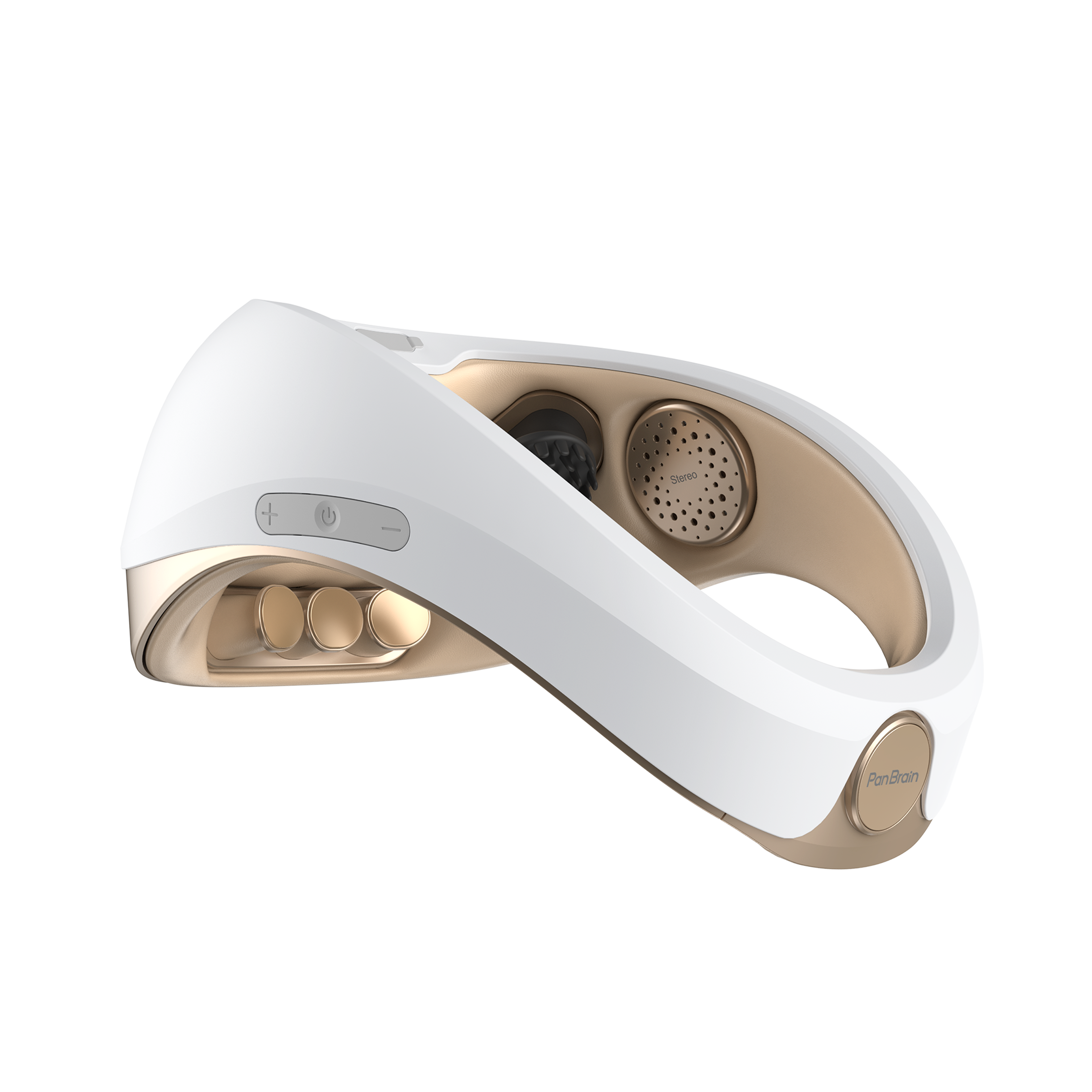
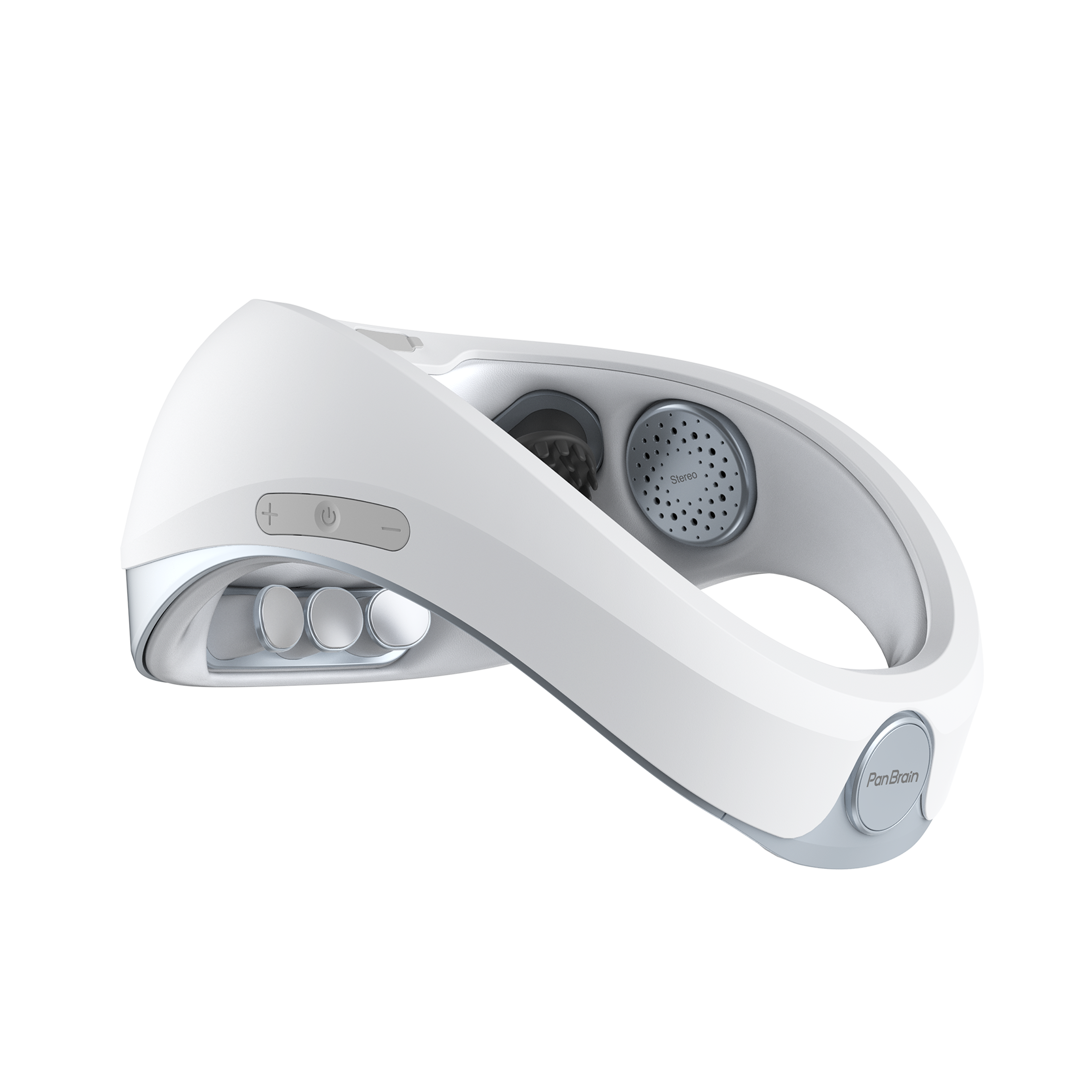
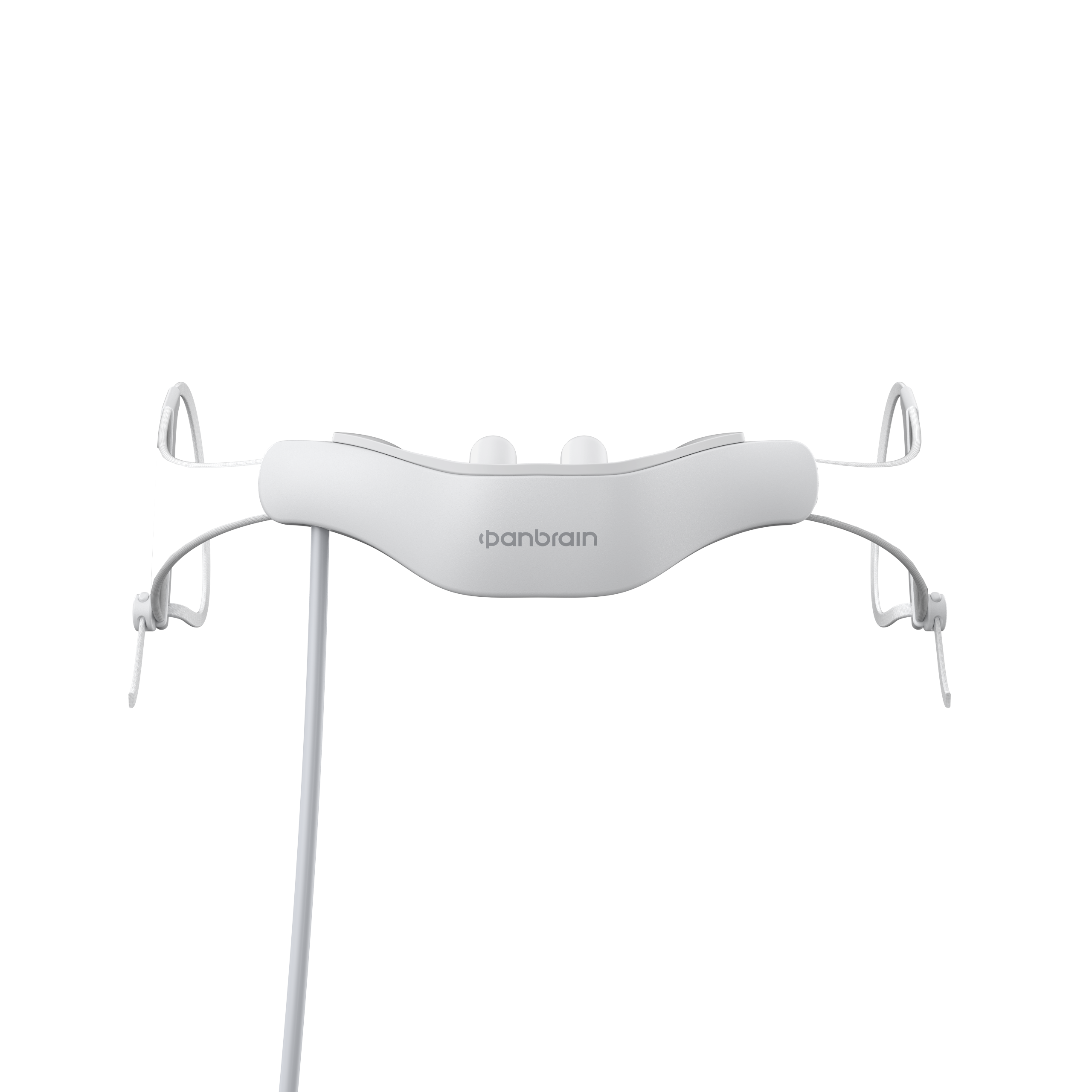
That's where the Panbrain Energy Capsule (EC2 Blue Cognition) and Panbrain Energy Capsule (EC2 Gold Energy) come in.
The Panbrain EC2 Blue is designed to support the prefrontal cortex—the heart of your executive network, the system that keeps you locked in and focused. Using transcranial direct current stimulation (tDCS)—a safe, non-invasive method validated in leading research centres—it delivers a gentle current to your dorsolateral prefrontal cortex. This subtle stimulation lowers the activation threshold of your neurons, making them more responsive to the tasks you choose to focus on. It promotes calcium influx and BDNF release, reinforcing longterm potentiation—the same neural mechanism that underlies learning, memory, and sustained concentration. In short, it helps you stay in the zone when you need it most.
The Panbrain EC2 Gold takes a complementary approach. As we've seen, flow requires not only focus but also the right emotional state—a sense of safety, curiosity, and openness. Gold Energy targets the prefrontal-limbic circuitry that connects executive control with deeper emotional centres. By gently modulating cortical excitability, it helps steady the "background noise" of mental tension, allowing your brain to shift from stress-driven alertness into a more receptive, creative state—exactly the kind of environment where flow can emerge.
Together, Blue and Gold work with your brain's natural rhythms: one sharpens your focus when you need to bear down, the other helps you stay calm and open enough to let inspiration in. They don't replace the work—they simply help your brain show up ready.
References
[1]Ulrich, M., Keller, J., & Grön, G. (2016). Neural signatures of experimentally induced flow experiences identified in a typical fMRI block design with BOLD imaging. Social Cognitive and Affective Neuroscience, 11(3), 496–507.
[2]Newberg, A., Alavi, A., Baime, M., Pourdehnad, M., Santanna, J., & d’Aquili, E. (2001). The measurement of regional cerebral blood flow during the complex cognitive task of meditation: A preliminary SPECT study. Psychiatry Research: Neuroimaging, 106(2), 113–122.
[3]Keller, J., & Bless, H. (2008). Flow and regulatory compatibility: An experimental approach to the flow model of intrinsic motivation. Personality and Social Psychology Bulletin, 34(2), 196–209.
[4]Keller, J., Ringelhan, S., & Blomann, F. (2011). Does skills–demands compatibility result in intrinsic motivation? Experimental test of a basic notion proposed in the theory of flow-experiences. The Journal of Positive Psychology, 6(5), 408–417.
[5]Ma, Q., Pei, G., & Meng, L. (2017). Inverted U-shaped curvilinear relationship between challenge and one’s intrinsic motivation: Evidence from event-related potentials. Frontiers in Neuroscience, 11, Article 131.
[6]Coull, J. T., Vidal, F., Nazarian, B., & Macar, F. (2004). Functional anatomy of the attentional modulation of time estimation. Science, 303(5663), 1506–1508.
[7]Ulrich, M., Keller, J., Hoenig, K., Waller, C., & Grön, G. (2014). Neural correlates of experimentally induced flow experiences. NeuroImage, 86, 194–202.
[8]Walker, C. J. (2010). Experiencing flow: Is doing it together better than doing it alone? The Journal of Positive Psychology, 5(1), 3–11.
[9]Jung-Beeman, M., Bowden, E. M., Haberman, J., Frymiare, J. L., Arambel-Liu, S., Greenblatt, R., Reber, P. J., & Kounios, J. (2004). Neural activity when people solve verbal problems with insight. PLOS Biology, 2(4), Article e97.
[10]Csikszentmihalyi, M., & LeFevre, J. (1989). Optimal experience in work and leisure. Journal of Personality and Social Psychology, 56(5), 815–822.
[12]Gruber, M. J., Gelman, B. D., & Ranganath, C. (2014). States of curiosity modulate hippocampus-dependent learning via the dopaminergic circuit. Neuron, 84(2), 486–496.
[13]Peifer, C., Schönfeld, P., Wolters, G., Aust, F., & Margraf, J. (2020). Well done! Effects of positive feedback on perceived self-efficacy, flow and performance in a mental arithmetic task. Frontiers in Psychology, 11, Article 1008.
Home tDCS headset for focus & memory — 17 min/day, studied in a 100-participant trial. 30-day home trial, no subscription.
See EC2 Blue — $1,669 or $139/mo