

Author: Dr. Nailin Yao
Have you ever had one of those days where you sit down to work, and your brain just won't cooperate? You stare at the screen, but your mind is everywhere except on the task at hand. Then, on other days, you're locked in — laser-focused, effortlessly productive, and unstoppable.
What makes the difference?
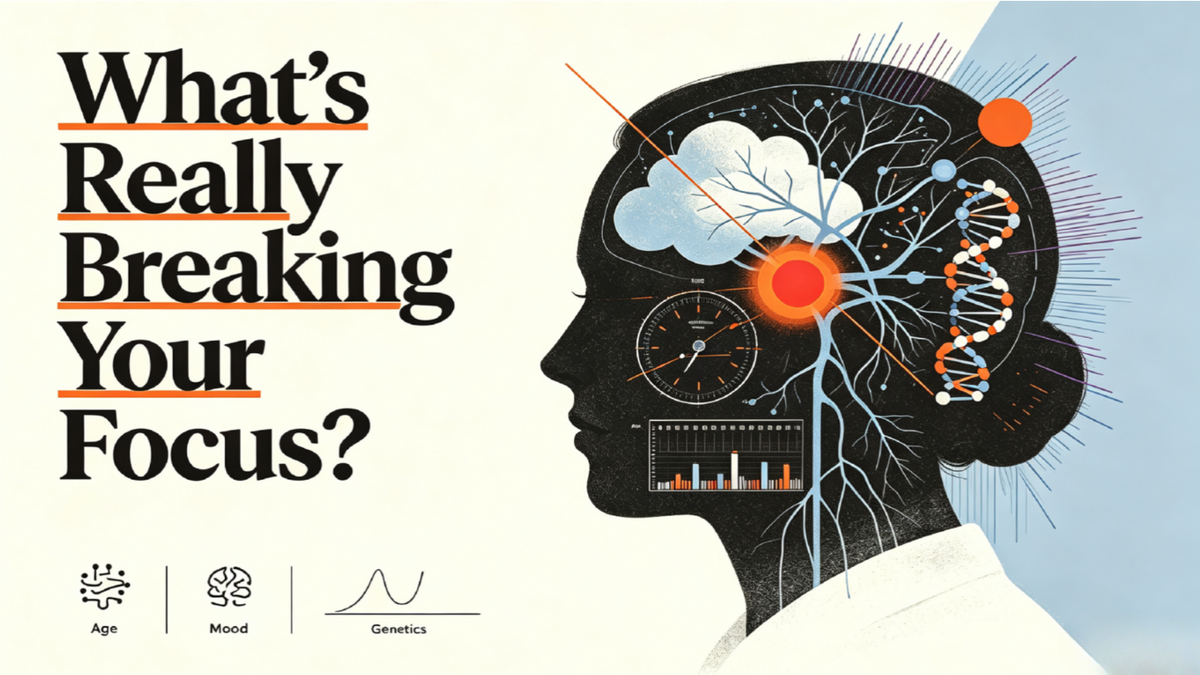
It turns out that "focus" isn't a single switch you flip on and off. Your attention is actually made up of three distinct systems, each with its own job: the orienting network, the executive network, and the alerting network. They work together, sometimes balancing each other out, and each one affects how well you concentrate in any given moment.
When we say someone has "good focus," what we really mean is that all three of these systems are pulling in the same direction. Understanding how they work — and where they can stumble — might just change the way you think about your own attention.
How Attention Actually Works
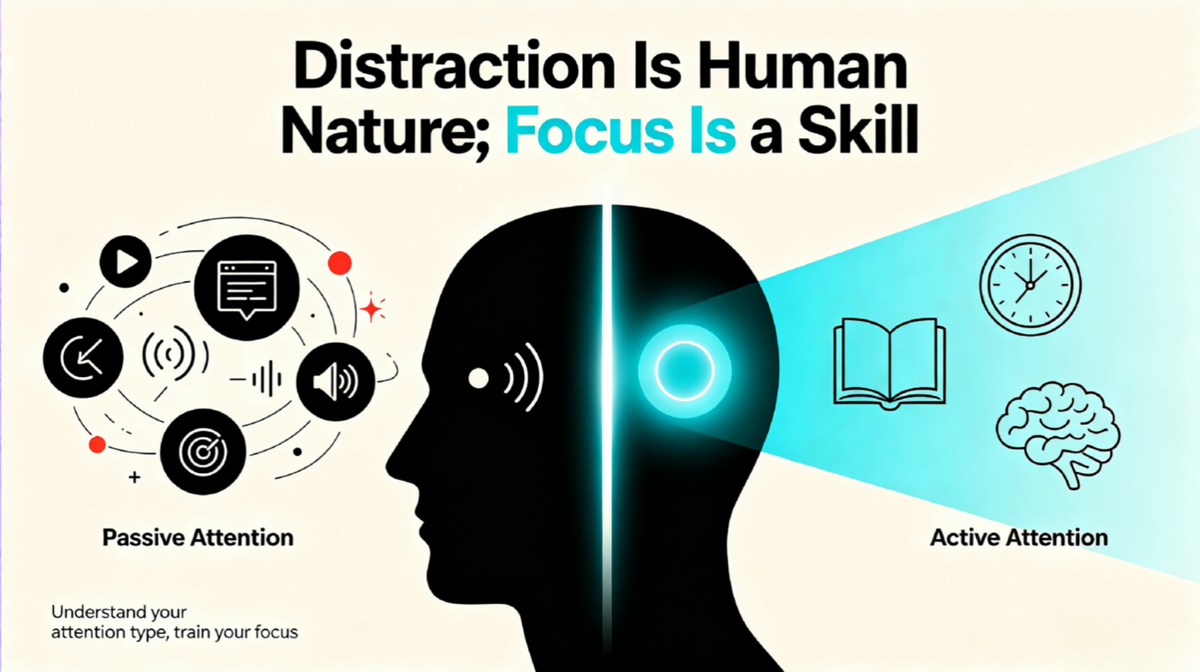
Our attention is made up of three interconnected systems: the orienting network, the executive network, and the alerting network. Each of these three systems has its own distinct role—they operate independently, yet maintain a subtle balance with one another. Every system has a clear function: the orienting network guides the direction of attention[1]; the executive network sustains the steady output of focus[2]; and the alerting network constantly monitors changes in the environment[3]. When we evaluate someone's ability to concentrate, we actually need to assess these three dimensions together. As mentioned earlier regarding active and passive attention, how they perform across these different systems directly affects the overall state of focus. So how does focus actually work?
Let's walk through a simple example. Imagine you're meditating. You start by focusing on the tip of your nose, feeling the breath move in and out. Then, a voice guides you to shift your attention to your belly.Your brain will then initiate the following process:
Step 1: Attentional Dissociation[4]
Like slowly releasing your grip on a cup, your attention gently pulls away from the sensation at your nose. You might notice that the breath feels fainter, more distant. This isn't a loss of focus — it's the brain preparing for what comes next.
Step 2: Attention Shifting[5]
This isn't like flipping a light switch. It's more like sunlight slowly spreading across a room. Your attention travels down through your throat, your chest, and finally settles in your belly. You might even feel a sense of movement — like sweeping a flashlight beam across a dark room.
Step 3: Re-engagement
When attention finally settles on the abdomen, the reengagement step is complete[3]. At this point, you can clearly feel the rising and falling rhythm of your abdomen—just as focused as when you were observing the tip of your nose. Interestingly, even though the focus point has changed, the intensity of your concentration hasn't diminished—you've simply shifted your anchor. This ability to switch anchors perfectly illustrates the brain's flexibility in regulating attention, much like a photographer adjusting the framing while keeping the image sharp.
The entire reorientation process may seem simple, but it actually involves precise coordination of neural signals. From disengaging from the original focus to establishing a new anchor, each stage requires coordination among different brain regions. This capacity for dynamic adjustment is exactly the foundation that allows us to respond flexibly to changes in our environment.
For those with attention regulation challenges, however, the disengagement mechanism works differently—this can lead them to become overly absorbed in activities they find highly interesting, making it very difficult to pull their attention away.
When we say we're lacking focus, what we're really complaining about is the brain's executive control function. For example, when you're racing against a deadline, you need to suppress urges to eat, shop, or chat, and adjust your action plan—that's your executive control function at work.
Have you ever had a crush on someone? Every time you walked past them, you'd deliberately chat and laugh with a friend, acting completely casual on the surface, while your heart was pounding like a drum—and afterwards you'd think, "Thank goodness they didn't notice." This ability to control emotions and behaviour is precisely supported by the executive control capacity of the prefrontal cortex.
This function also influences our choices. For instance, you might be passionate about physics, but because your chemistry grade is dragging you down, you have to get extra help. At that point, you need to engage your executive control to force yourself to focus on chemical formulas. Some students disliked a particular teacher and consequently performed poorly in that subject—essentially because their executive control system wasn't yet mature enough to regulate their attention effectively.
Let's understand the executive control of attention through a classic experiment. The famous Stroop Effect in neuroscience illustrates this mechanism perfectly. In the experiment, the word "red" appears written in blue ink, "green" written in yellow ink, and so on. Participants have to override the automatic tendency to read the word itself and instead focus on saying the actual colour of the ink. For example, when you see the word "red" written in green, you have to suppress the impulse to say "red" and instead correctly say "green." This process is like a tugofwar in your mind, requiring the executive control function to constantly adjust its direction of effort.
The brain network responsible for executive control involves several key regions, such as the prefrontal cortex and the posterior cingulate cortex. The prefrontal cortex, located behind the forehead, is mainly responsible for decisionmaking and planning; the posterior cingulate cortex, near the centre of the brain, participates in information integration. These regions extend from the front of the brain up to the parietal lobe at the top, forming a collaborative neural network.
For those with attention regulation challenges, attention difficulties are largely reflected in executive control function. They don't simply have poor attention; in fact, when they encounter something they're truly interested in, they can display remarkable concentration. For example, when absorbed in building a Lego model, they might not even hear family members calling them to dinner—they enter a complete flow state, and when they finally come back to themselves, an entire afternoon may have passed. This extraordinary focus may seem like an advantage, but it actually reflects an imbalance in attention regulation—they have great difficulty voluntarily shifting their attention away from a current task, as if they were glued to whatever they find interesting.
This unique pattern actually reveals a core characteristic of attention regulation challenges: when faced with highly appealing tasks, their attention becomes overly locked in, showing sustained concentration that can exceed the norm; but when it comes to ordinary tasks, they are extremely susceptible to environmental distractions. This polarisation suggests that the issue isn't their attention itself, but rather a difficulty in the mechanism that flexibly shifts attention between different tasks[8].
Through this example, we can see that attention isn't simply about being "focused" or "distracted"—it's the result of multiple systems working together. Everyone's attentional profile is as unique as a fingerprint, sharing common patterns while also exhibiting individual differences. Understanding this complexity helps us view different people's concentration abilities with greater compassion, rather than judging them against a single standard.
 Now let's turn to another important dimension of attention—the alerting network. As shown in the diagram, this system is primarily active in the thalamus and brainstem regions. Alertness is like your brain's standby mode—it determines the baseline level at which you sustain focus. For instance, when you wake up feeling refreshed in the morning, your alertness is at its peak, allowing you to respond quickly to various situations. But if you have a lunch heavy on rice or noodles, the drowsiness caused by blood sugar fluctuations can noticeably lower your alertness.
This physiological pattern is especially important for certain professions. Take airport security screeners, for example: they need to stare at X-ray images for hours on end, and any lapse could allow dangerous items to slip through. Studies have found that after 90 minutes of sustained focus, the average person's alertness efficiency drops by 30%. That's why these positions typically use two-hour shift rotations, with scheduled breaks to maintain workers' alertness levels and ensure inspection quality throughout each shift.
In daily life, alertness can be divided into two types: external and internal.
External alertness is triggered the moment a clear external signal prompts our attentional system to kick in[7]. For example, at the start of an 800-metre race, when the starter begins the countdown—"5, 4, 3, 2, 1"—your muscles tense up and your heart rate increases. These distinct countdown signals act like a switch, putting you on high alert until the moment the starting gun fires and you burst forward.
Internal (tonic) alertness, on the other hand, is like a surveillance camera that runs around the clock[9]. Take an observatory astronomer, for instance: they face nearly static images of the night sky every day, yet their brain maintains a basic level of vigilance. When a faint new point of light suddenly appears in the telescope's feed, the astronomer can immediately detect that anomaly. This ability to continuously monitor without external reminders is precisely what internal alertness does behind the scenes.
The sensitivity of the alertness system is also influenced by visual information. For example, we naturally notice red content among a page full of text—this response is essentially encoded in our genes. As a colour directly associated with wounds and fire in the natural world, red has become the default danger alert colour in the human visual system through millions of years of evolution. In modern life, from traffic signals to fire safety equipment, the widespread use of red as a warning colour is simply consistent with this biological instinct.
Attention isn't one thing — it's three. The orienting network directs your focus, the executive network keeps you on track, and the alerting network ensures you're ready to respond. When all three are working in harmony, concentration feels effortless. When one stumbles, so does your focus.
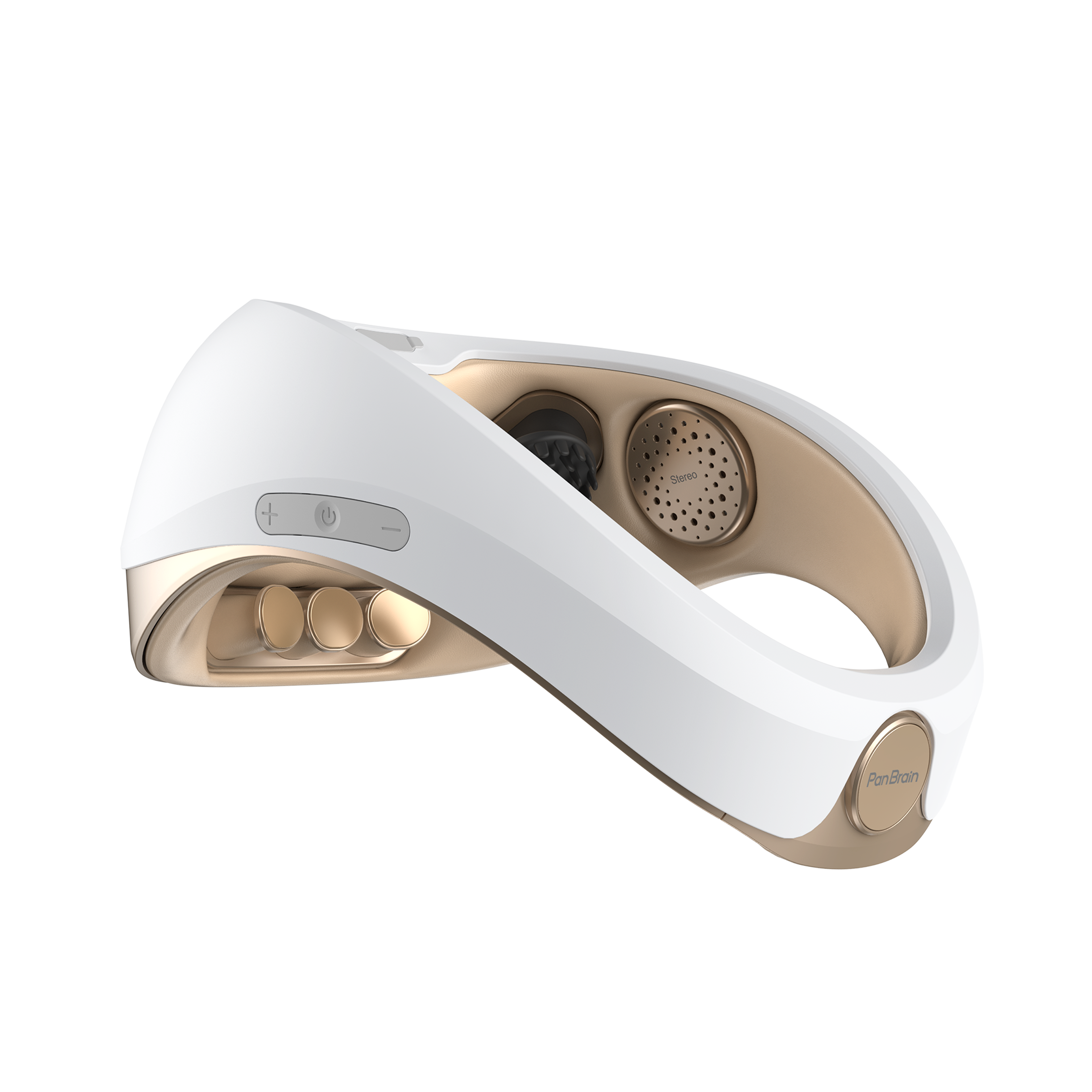
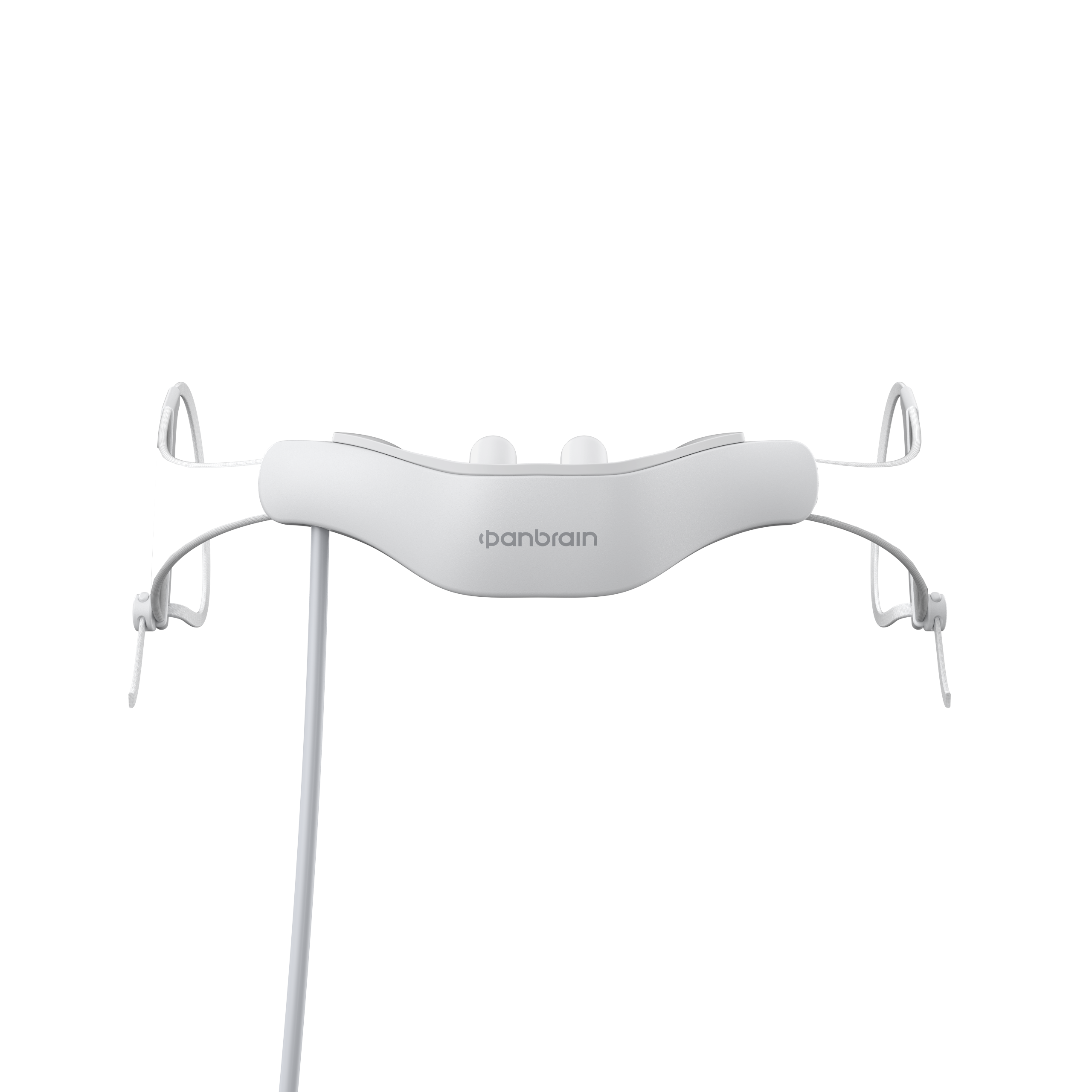
That's where the Panbrain Energy Capsule (EC2 Blue Cognition) comes in. Designed to support the prefrontal cortex — the heart of your executive and orienting networks — it uses transcranial direct current stimulation (tDCS), a safe, noninvasive method validated in leading research centres. A gentle current is delivered to your dorsolateral prefrontal cortex, subtly lowering the activation threshold of neurons so they respond more readily to the tasks you choose to focus on. At the same time, it promotes calcium influx and BDNF release, reinforcing the brain's natural learning and adaptation mechanisms. In simple terms: it helps your brain stay in the driver's seat — sharp, flexible, and ready to direct your attention where it matters most.
Because focus isn't a gift you're born with — it's a skill you can build. And with the right support, it gets easier every day.
References
[1]Posner, M. I., & Petersen, S. E. (1990). The attention system of the human brain. Annual Review of Neuroscience, 13, 25–42.
[2]Fan, J., McCandliss, B. D., Fossella, J., Flombaum, J. I., & Posner, M. I. (2005). The activation of attentional networks. NeuroImage, 26(2), 471–479.
[3]Petersen, S. E., & Posner, M. I. (2012). The attention system of the human brain: 20 years after. Annual Review of Neuroscience, 35, 73–89.
[4]Posner, M. I., Walker, J. A., Friedrich, F. J., & Rafal, R. D. (1984). Effects of parietal injury on covert orienting of attention. The Journal of Neuroscience, 4(7), 1863–1874.
[5]Posner, M. I., & Petersen, S. E. (1990). The attention system of the human brain. Annual Review of Neuroscience, 13, 25–42.
[6]Fan, J., McCandliss, B. D., Fossella, J., Flombaum, J. I., & Posner, M. I. (2005). The activation of attentional networks. NeuroImage, 26(2), 471–479.
[7]Luna-Rodriguez, A., Wendt, M., Kerner auch Koerner, J., Gawrilow, C., & Jacobsen, T. (2018). Selective impairment of attentional set shifting in adults with ADHD. Behavioral and Brain Functions, 14, Article 18.
[8]Sturm, W., de Simone, A., Krause, B. J., Specht, K., Hesselmann, V., Radermacher, I., Herzog, H., Tellmann, L., Müller-Gärtner, H.-W., & Willmes, K. (1999). Functional anatomy of intrinsic alertness: Evidence for a fronto-parietal-thalamic-brainstem network in the right hemisphere. Neuropsychologia, 37(7), 797–805.
Home tDCS headset for focus & memory — 17 min/day, studied in a 100-participant trial. 30-day home trial, no subscription.
See EC2 Blue — $1,669 or $139/mo