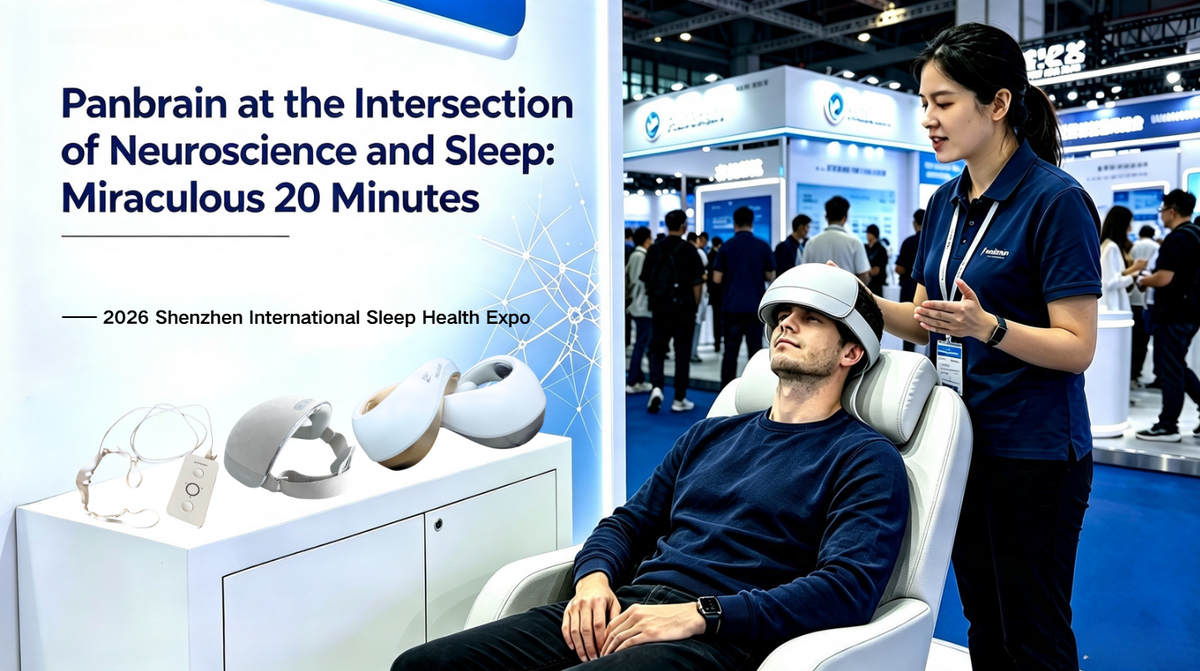

— A dispatch from the 2026 Shenzhen International High-Performance Medical Device & Innovative Pharmaceuticals Exhibition
September in Shenzhen still carried the summer heat. Inside Hall 1 of the Shenzhen Convention and Exhibition Center (Futian), crowds streamed through the venue as the 2026 Shenzhen International High-Performance Medical Device & Innovative Pharmaceuticals Exhibition opened its doors. Across 30,000 square meters, 317 exhibitors showcased cutting-edge medical technologies, from advanced imaging systems and surgical robots to AI-powered healthcare. Brain-computer interfaces (BCI) and smart medical tech stood out as the main attractions.
At this grand arena for high-performance medical devices, Panbrain arrived with a simple question: As sleep issues, attention challenges, and emotional strain affect more and more people, could there be a solution that helps the brain restore its natural rhythms from within?

Caption 1 :The 2026 Shenzhen International High-Performance Medical Device Expo & Innovative Pharmaceuticals Exhibition.
The Weight of a tDCS Device
Located in Hall 1, Panbrain’s booth was modest compared to the massive imaging machines and surgical robots nearby. We showcased one Panbrain tDCS device, two Energy Capsules, and the Lume sleep device.
 Caption 2 :Panbrain's exhibit featuring the medically certified tDCS device and consumer Energy Capsules.
But this "simplicity" represents the hardest part of neuromodulation. The core challenge of bringing neurotech to the public isn't making devices bigger; it's condensing decades of neuroscience into a product that is safe, precise, and suitable for home use. We highlighted the Panbrain tDCS Device—among the first home-use tDCS devices approved in China. It has undergone rigorous medical-device review for safety, performance, and usage standards, far exceeding the benchmarks of standard consumer electronics.
How a Gentle Current Tunes the Brain's Rhythm
The principle of transcranial direct current stimulation (tDCS) is straightforward: by applying a very weak and precisely controlled direct current through scalp electrodes, it gently modulates the resting membrane potential of neurons, making them more responsive to relevant signals.
Think of the frontal lobe as the conductor of an orchestra. tDCS helps the conductor get into the right state, ensuring the whole orchestra plays in harmony. Delivering this micro-current precisely to target brain areas while keeping it safe and controlled at home requires over a decade of neuroscience research, structured validation, and continuous iteration—this is the core technical barrier of Panbrain.
This mechanism is backed by growing research. A randomized, double-blind trial published in Scientific Reports showed that 10 consecutive days of high-definition tDCS significantly improved sleep quality in individuals experiencing sleep difficulties—the total PSQI score (t=3.375, p=0.001), sleep quality, and sleep disturbance sub-items all showed significant improvements, with shortened sleep latency (p=0.023) and improved sleep efficiency (p=0.025). Another 2026 study in Neuroscience found that tDCS enhances working memory performance by increasing gamma-band power in the frontoparietal region; when combined with working memory training, n-back accuracy improved by 15.6%. These scientific findings are our confidence to showcase our products at a medical device expo.

We also brought our consumer-facing products to the show. The EC2 series is built on tDCS technology, divided into the Cognition Edition (targeting daytime focus and memory challenges) and the Energy Edition (targeting stress-related tension and emotional fluctuations). For those looking to experience neuromodulation in daily life, the Energy Capsules are a highly accessible entry point.
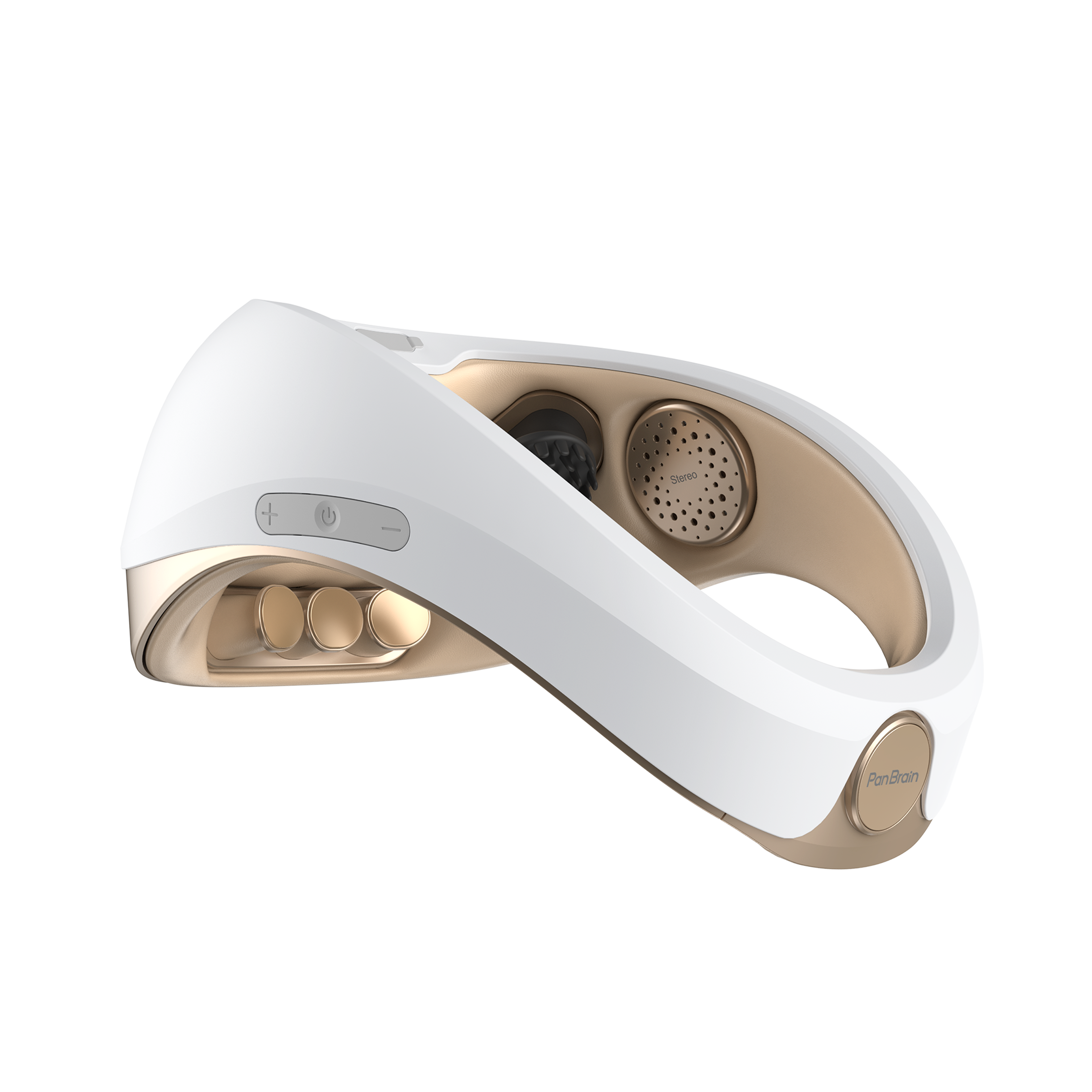
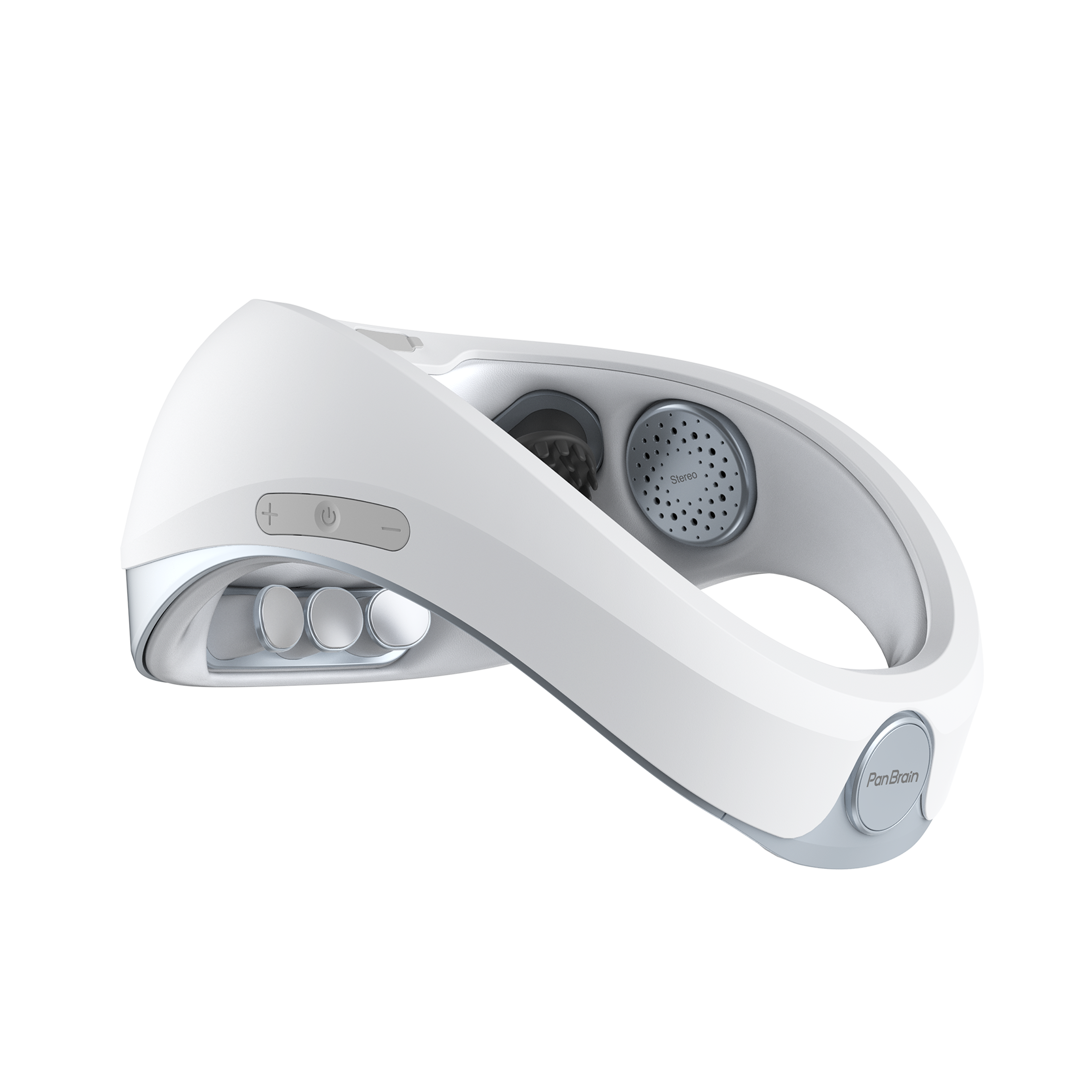
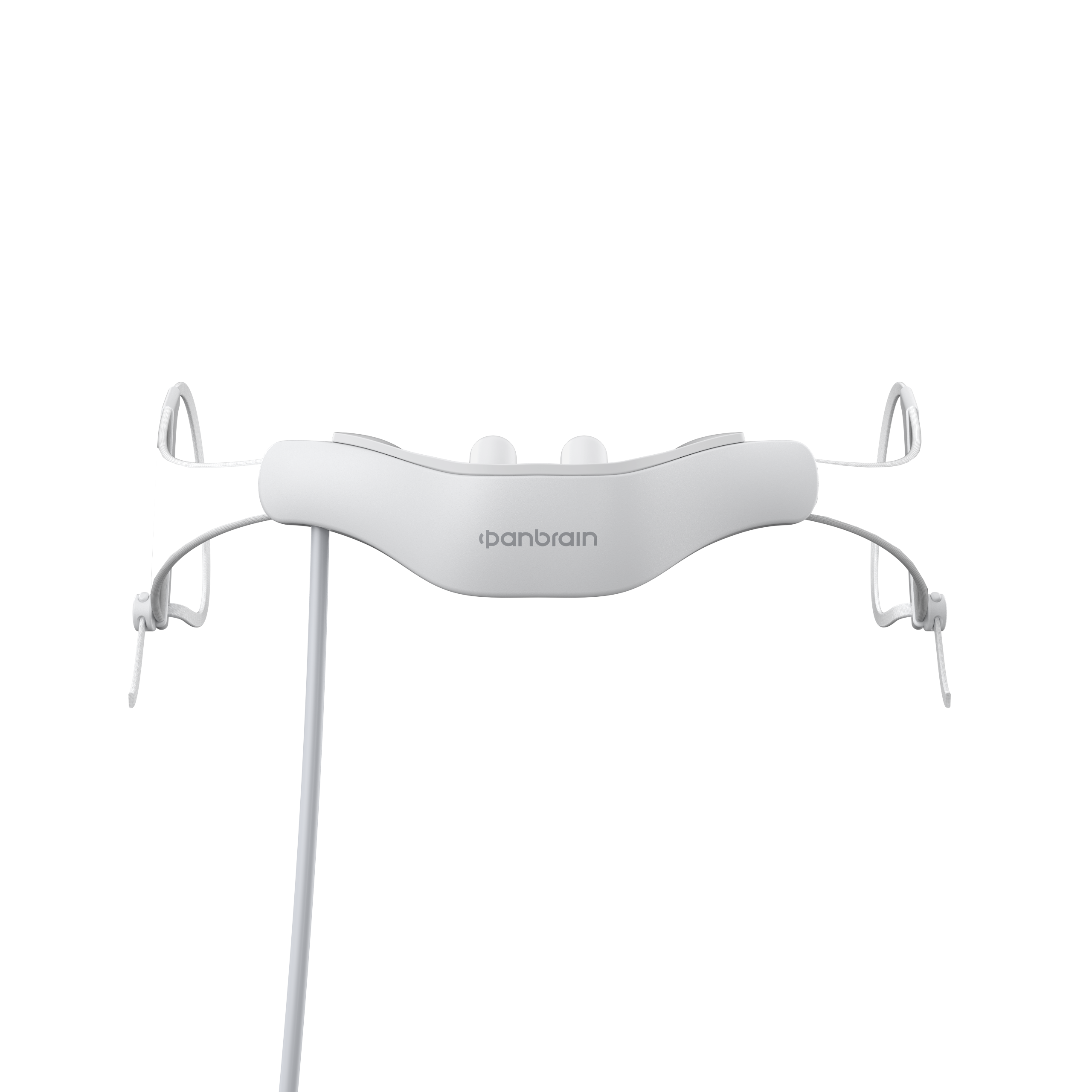
The Panbrain Lume takes a different path—delivering 810nm near-infrared light through the nasal cavity to the ventromedial prefrontal cortex, energizing mitochondria and helping the brain restore its natural sleep rhythm. Whether it's difficulty sleeping, stress-induced restlessness, or daytime fatigue, we offer clear, tailored solutions.
Real Conversations at the Booth: Curiosity and Recognition from Around the World
On the second day of the expo, a young visitor tried the EC2 Blue and smiled, asking, "What is this? It’s so new and fun!" His genuine curiosity brought a lively energy to the booth.
 Caption 4 :A visitor experiencing the EC2 Blue Cognition version at the expo.
Notably, we welcomed many international attendees who showed a high acceptance of neuromodulation tech. Many quickly entered a relaxed state, and lines often formed at our booth. A visitor from Europe shared that while he knew about tDCS from academic conferences, this was his first hands-on experience, noting it felt "gentler and more natural than expected." This global feedback confirms that brain science innovation is a universal language.

Caption 5 :Global interest: an international attendee shares positive feedback after the trial.
From Lab to Daily Life: A Slower but More Solid Path
Founded by Dr. Nailin Yao, a Yale University postdoctoral fellow in psychiatry, Panbrain was recognized as a "National High-Tech Enterprise" and a "Shenzhen Specialized, Refined, Differentiated, and Innovative SME" in 2024. Dr. Yao has over a decade of neuroscience research experience, 19 peer-reviewed SCI publications, and has been invited to speak on the TED stage.
Our core team shares this deep expertise, basing product development on rigorous validation and real-world needs. Recently, we partnered with Tongji Hospital (Wuhan) to advance the practical application of non-invasive BCI and neuromodulation, exploring a seamless "R&D—Clinical—Home" pathway.
 Caption 6 :Dr. Nailin Yao, Founder of Panbrain, sharing neuroscience insights on the TEDx stage.
At the expo, experts and attendees cared less about how complex a device looks and more about whether it can be used safely in real-world scenarios. We constantly ask ourselves this. Moving neuromodulation from the lab to daily life isn't just a tech breakthrough; it requires long-term research, validation, and clear boundaries. This path isn't fast, but we are committed to walking it step by step. Trust cannot be bought with marketing; it must be earned through evidence and time.
Another Definition of "High Performance"
By the afternoon of the third day, the crowd began to thin. As we packed up, we reflected on the event. Some stopped out of curiosity; some stayed to understand the science; and some came with long-standing sleep issues, hoping for a different approach.
A high-performance medical device expo is a place to showcase "hard power"—surgical robots, advanced imaging, precision diagnostics—all redefining MedTech. But in brain health, "high performance" isn't about complexity; it's about whether it can truly enter daily life and offer people a way to explore their own rhythm of sleep, emotion, and attention.
We are more convinced than ever: The value of neuromodulation lies not in being "cutting-edge," but in being genuinely "useful." And we are willing to take the time to do this, brick by brick
 Caption 6 :Showcasing Panbrain's clinical collaborations and technical credentials.
Disclaimer
This article is an event report and educational content about brain health. It does not constitute medical advice or a promise of product efficacy. The studies mentioned are from related fields and do not equate to clinical conclusions for this specific product. For issues related to sleep, mood, or attention, please consult a healthcare professional. Product indications, contraindications, and precautions are subject to the official registration certificate, user manual, and actual qualifications.
Reference:
Li, J., Li, A., Jiao, J., Hu, K., Jiang, Y., Hu, X., Wang, K., Chen, X., & Xie, C. (2025). Effects of high-definition transcranial direct current stimulation for the treatment of chronic insomnia: A randomized, double-blind, controlled trial. Scientific Reports, 15, Article 26574.
Alrasheed, H. A., Ilyas, M., Shah, Z. A., AlDossary, K. M., & Habib, I. (2026). Dissociable neural mechanisms of cognitive enhancement through transcranial stimulation and behavioral training. Brain Research, 1890, Article 150505.